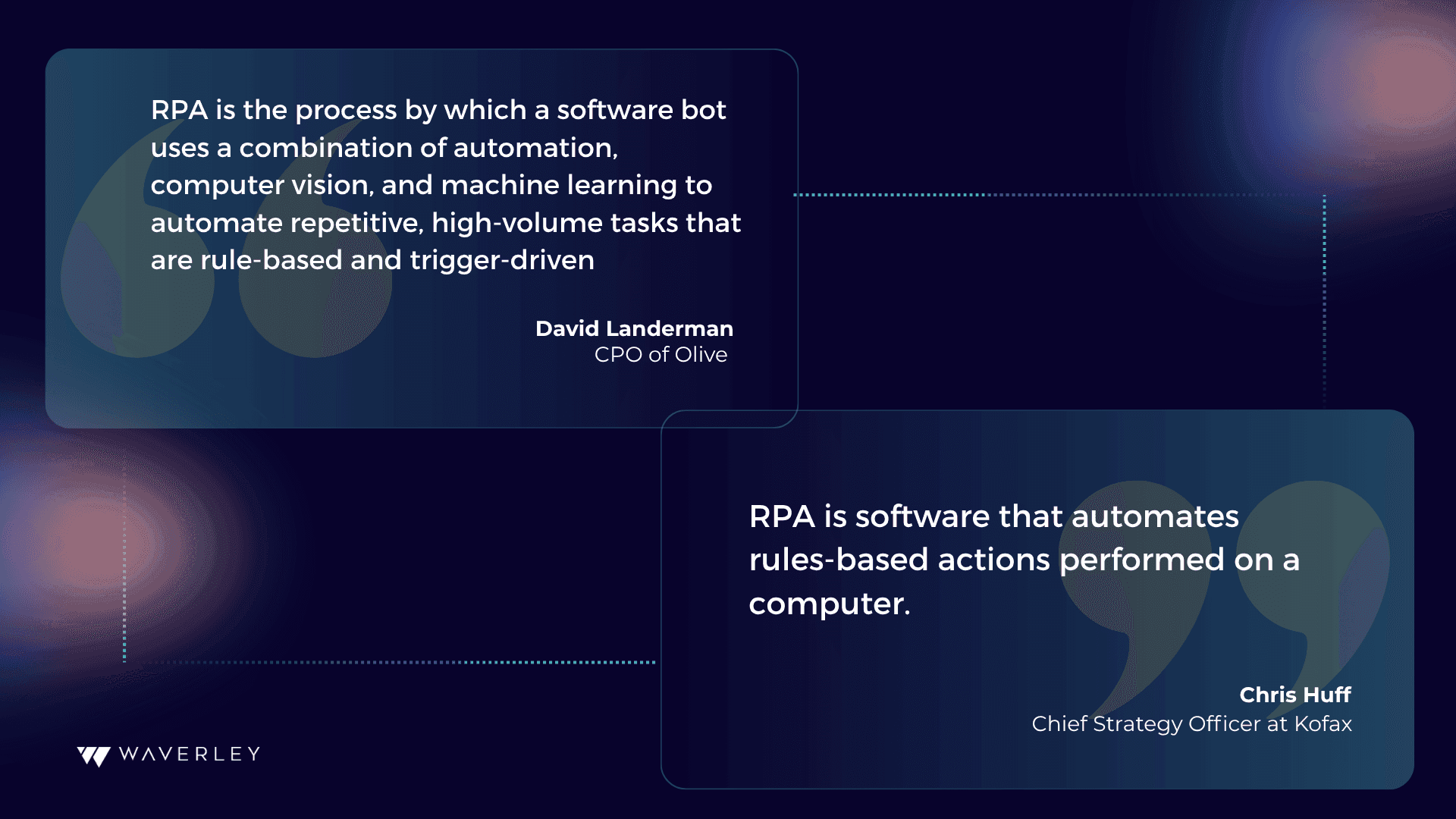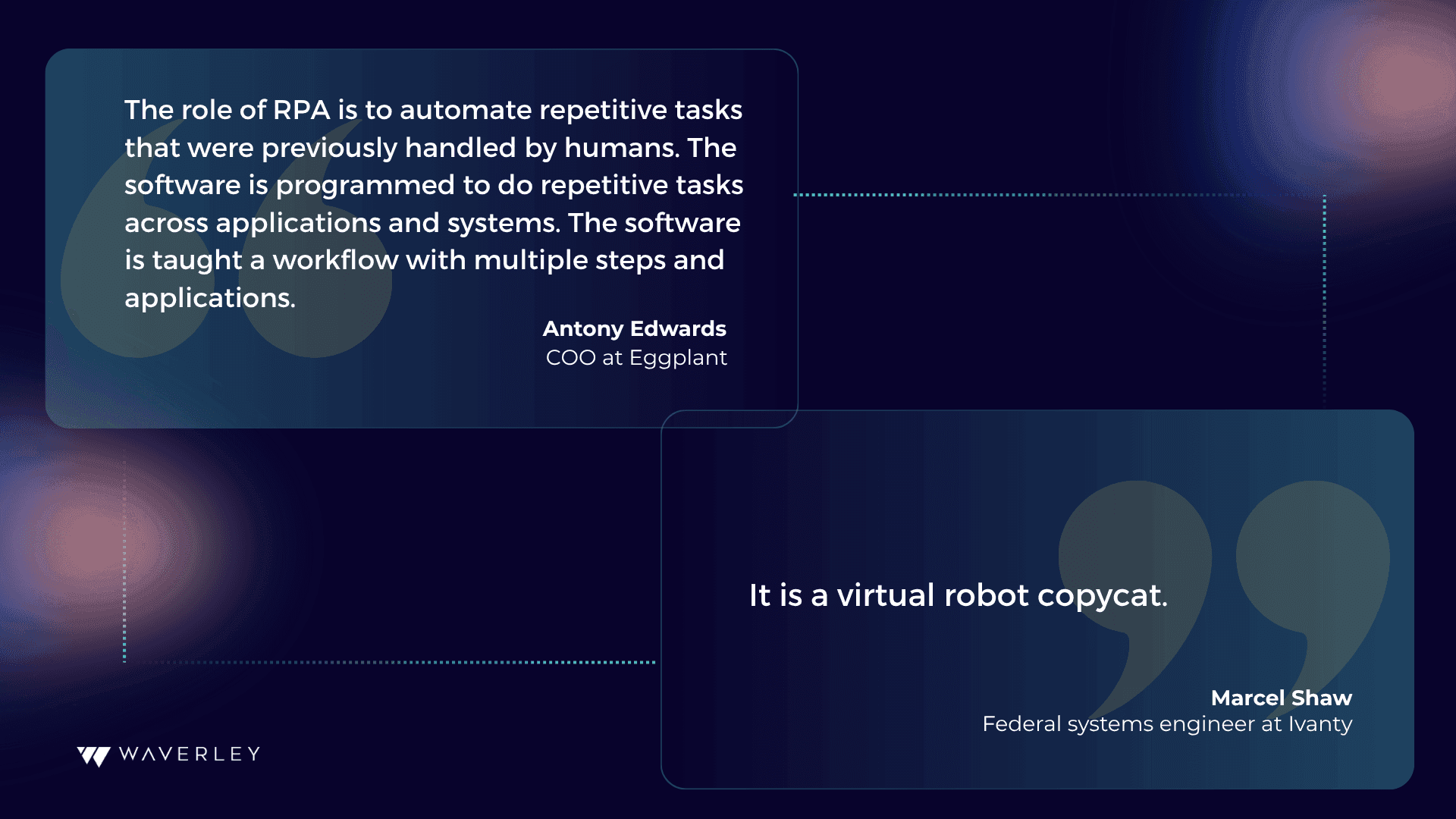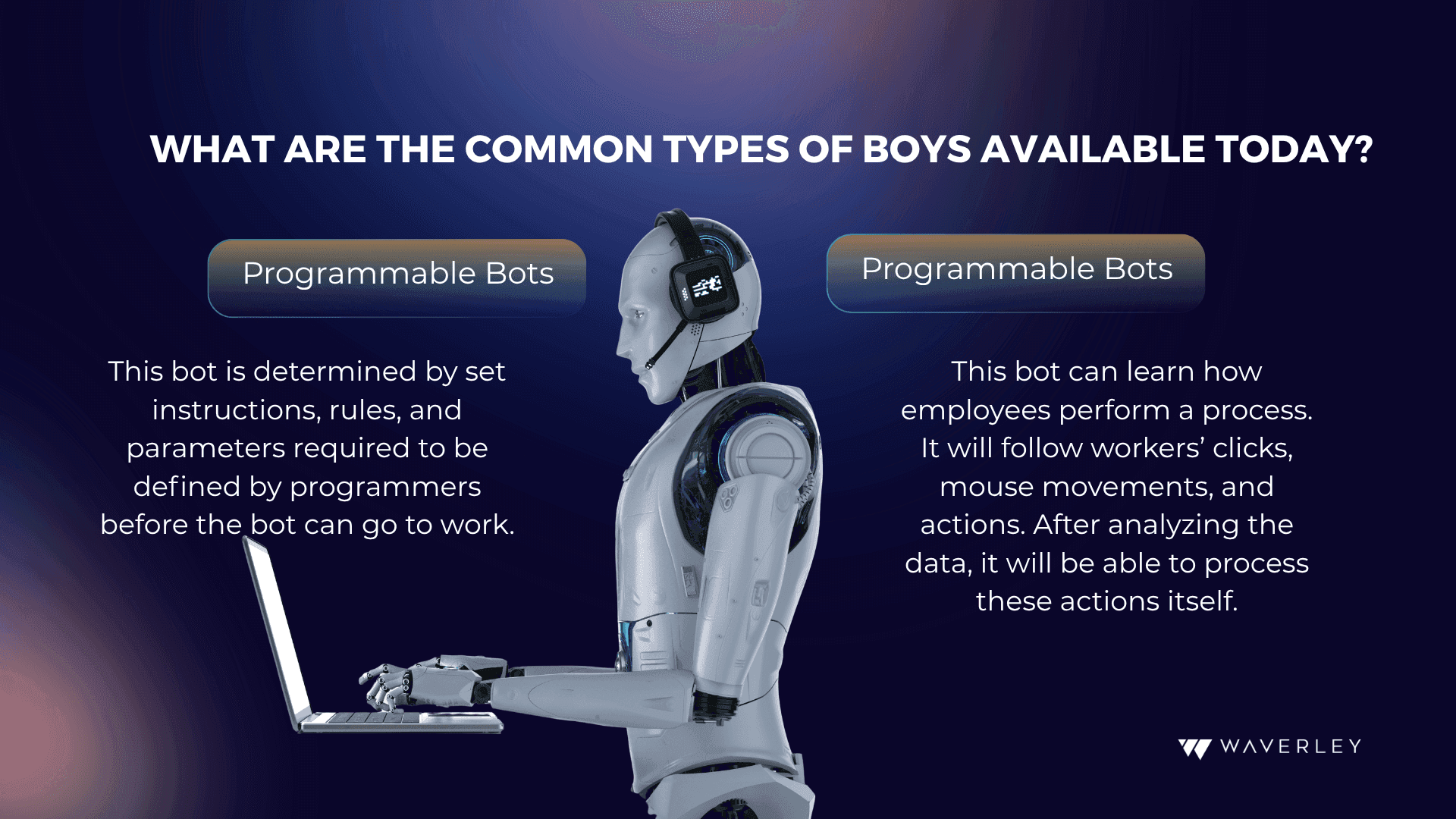
Robotic Process Automation or just RPA uses intelligence automation technologies to execute monotonous office/work tasks instead of humans. Tasks like extracting data, filling in forms, moving files, etc. What once required human action and supervision now can be done faster and easier. RPA unites the user interface and APIs to carry out and integrate repetitive tasks between business and efficiency applications. RPA’s instruments complete autonomous implementation of various activities and transactions across not related software systems.
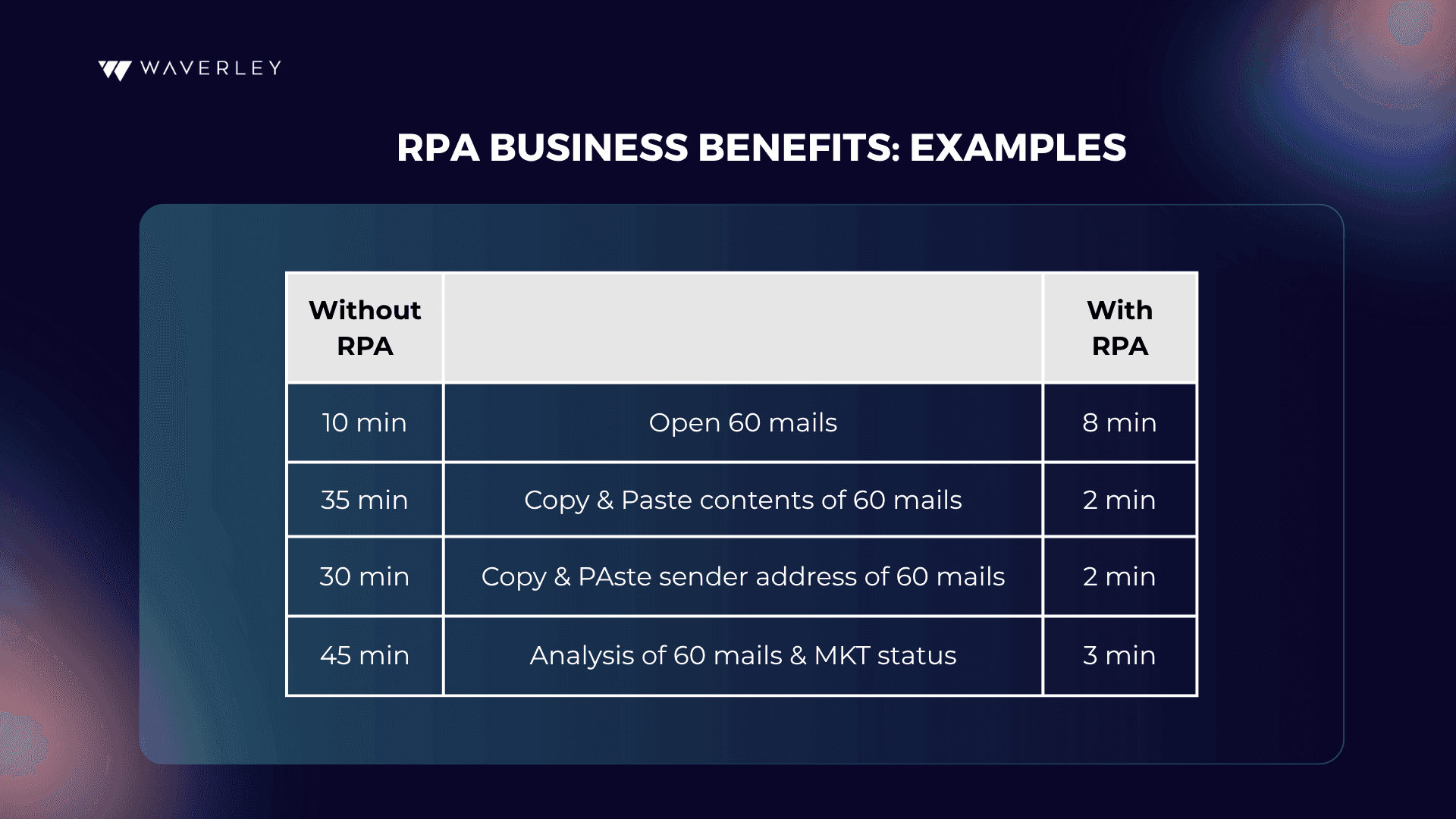
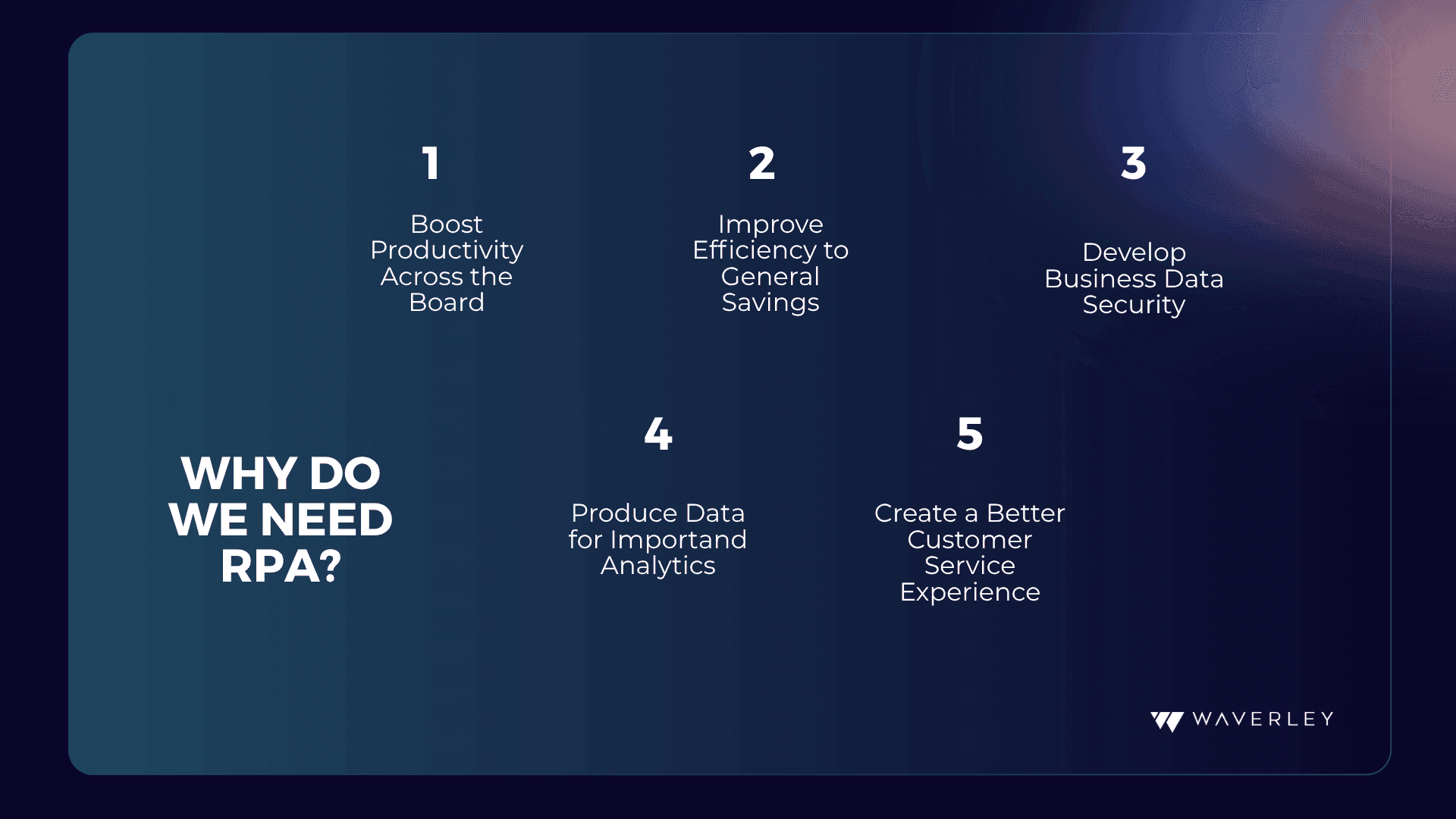
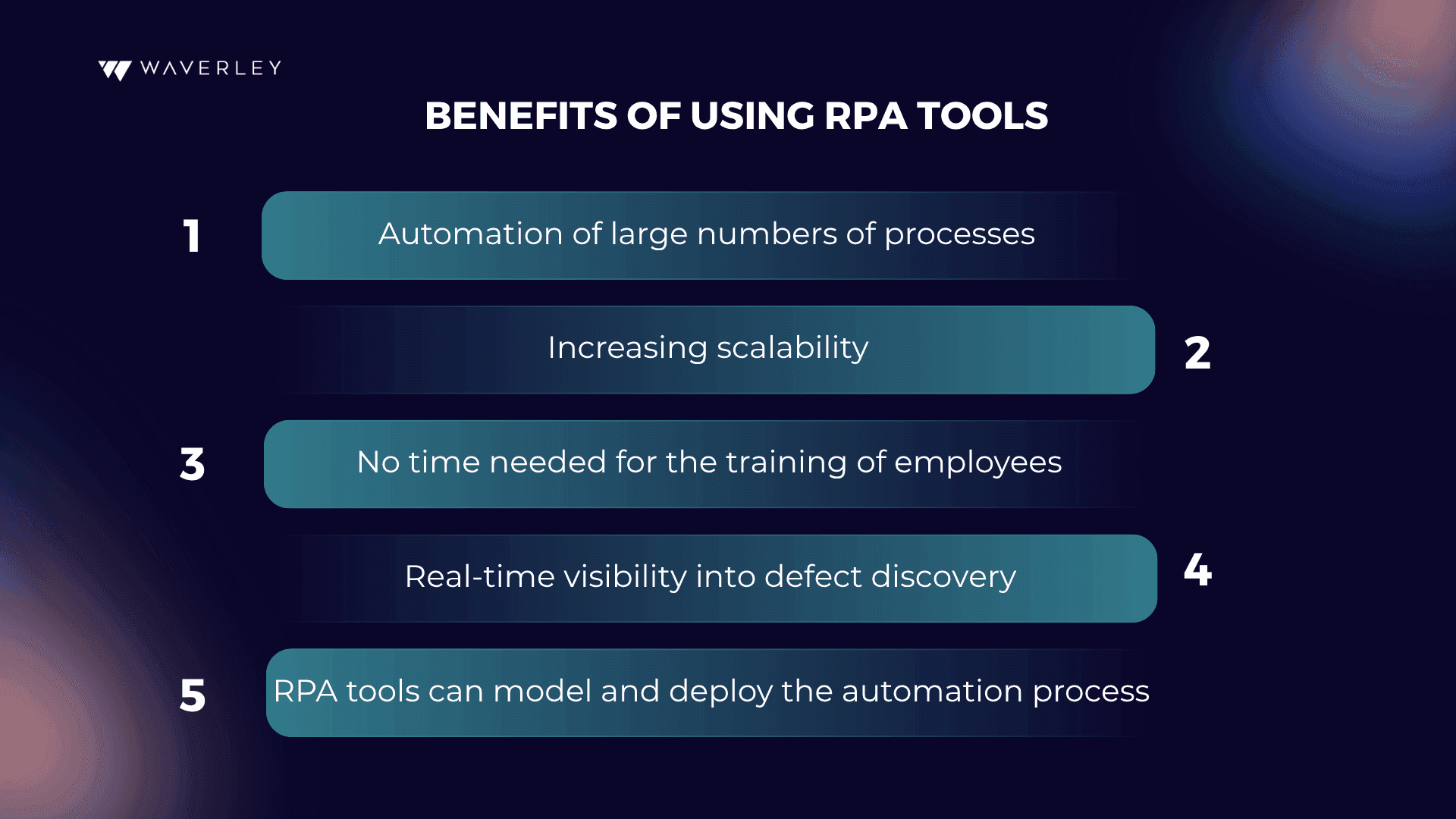
RPA uses in-rule software to execute business/work processes at a high volume. This allows to free human resources and to prioritize more complex tasks. Robotic automation allows CIOs to speed up their digital transformation efforts. In the end, it allows to generate higher ROI from their employees.
Yet, RPA needs high-quality and strong data governance boards to function successfully. In case the right guardrails (e.g. governance boards, documented guidelines, a center of excellence) are not in place, it might be challenging to meet business expectations.