

AI-Enabled Interpretation of Electrocardiograms
INDUSTRY
Healthcare
SERVICE
AI
CLIENT
R&D Project
R&D Project: AI-Enabled Interpretation of Electrocardiograms
"See how a team of data scientists at Waverley developed a tool for electrocardiograms annotation and interpretation, involving artificial intelligence."
See how a team of data scientists at Waverley developed a tool for electrocardiograms annotation and interpretation, involving artificial intelligence.
R&D Project
The Product
is an off-the-shelf software for remote patient monitoring and clinical diagnostics to enable constant cardiac monitoring and patient health surveillance. The tool works with digital health devices and apps to interpret and annotate electrocardiograms.
What We Delivered
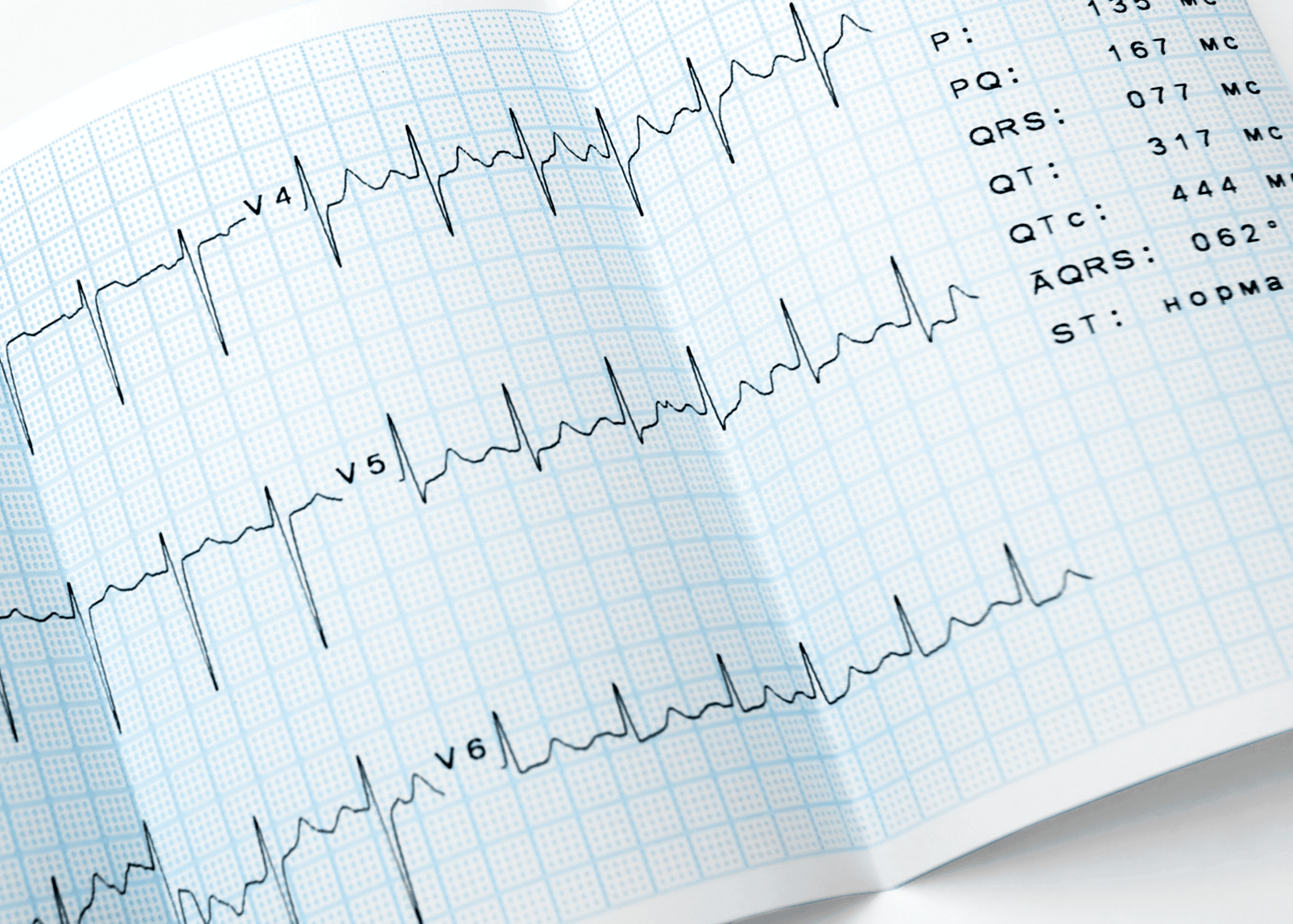
We developed an unprecedented tool to enhance and streamline the interpretation of electro cardio diagrams. Leveraging deep learning, the product detects and annotates a wide range of cardiac events according to HL7® aECG standard. Our highly adaptive solution can be integrated into an EHR system or work with a mobile health device. We developed a proprietary zero-knowledge system for the product to store Protected Health Information that is securely encrypted.
The product is an all-encompassing system that integrates with health assets such as electrocardiographs, Holters, hospital EHR systems, etc. Our product is very flexible, enabling patient supervision in any location, from the regular checkup to cardiac monitoring during rehab.
The electrocardiogram is obtained through a compatible digital recorder via API or a web-based platform and then automatically transferred to the system for interpretation. The team is constantly working to add new ECG formats to the list of supported.
The data is then analyzed to recognize patterns and detect cardiac events.
The software automatically calculates the amplitudes and intervals.
The reporting is made in charts, diagrams, and tables, with marked points of interest.
Pattern recognition lies at the core of The Product. Our team applied deep learning and big data approaches, analyzing the data from a ten-year population study. All records were labeled by the patent-pending technology and then verified by qualified cardiologists. These labels were used to train the system with the help of artificial neural networks.
Outcomes & Impact
As a result, we created a system that detects patterns so subtle that the doctors themselves can often miss, transforming patient monitoring and care.
Let's Build Something Great.
Tell us about your project — we'll find the right path forward.