What do OSS (Operational Support Systems), and BSS (Business Support Systems) stand for? What are their features and characteristics? Where do OSS/BSS intersect or overlap?
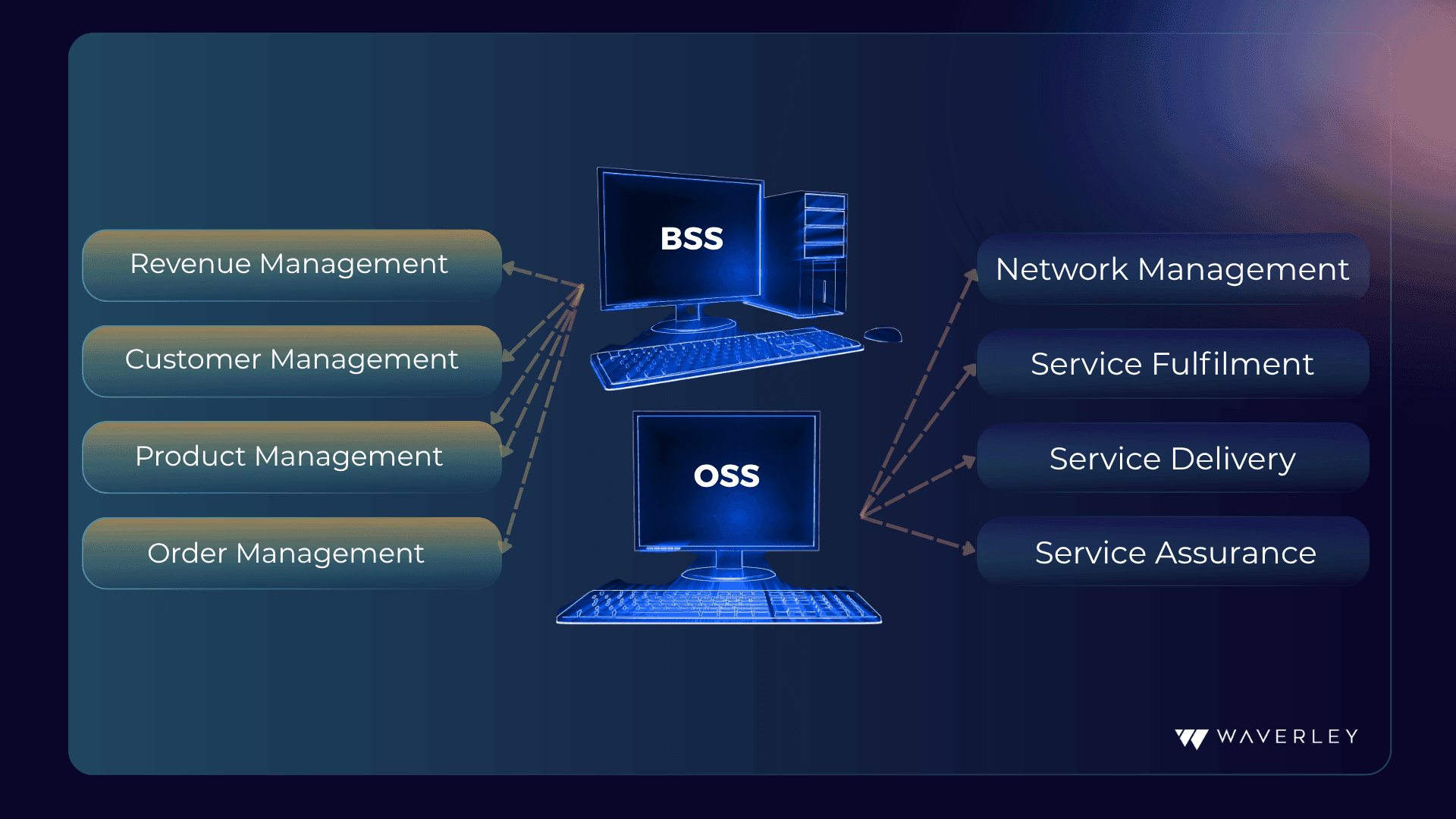
It’s very important to state that the combination of OSS and BSS systems allows communication networks to effectively and efficiently provide services to subscribers.
What are Operational Support Systems (OSS) and Business Support Systems (BSS) in Telecom?
The telecommunication industry is a sector made up of companies that provide communication (internet, cell connection, etc.) globally through ordinary or fiber-optic cables, or wireless means. Telecom offers the infrastructure that enables data such as text, voice, and audio/video to be sent worldwide.
OSS and BSS are the two main functions of the telecom industry. These functions are designed to increase customer service quality, decrease operating costs, and improve network reliability.
What is OSS?
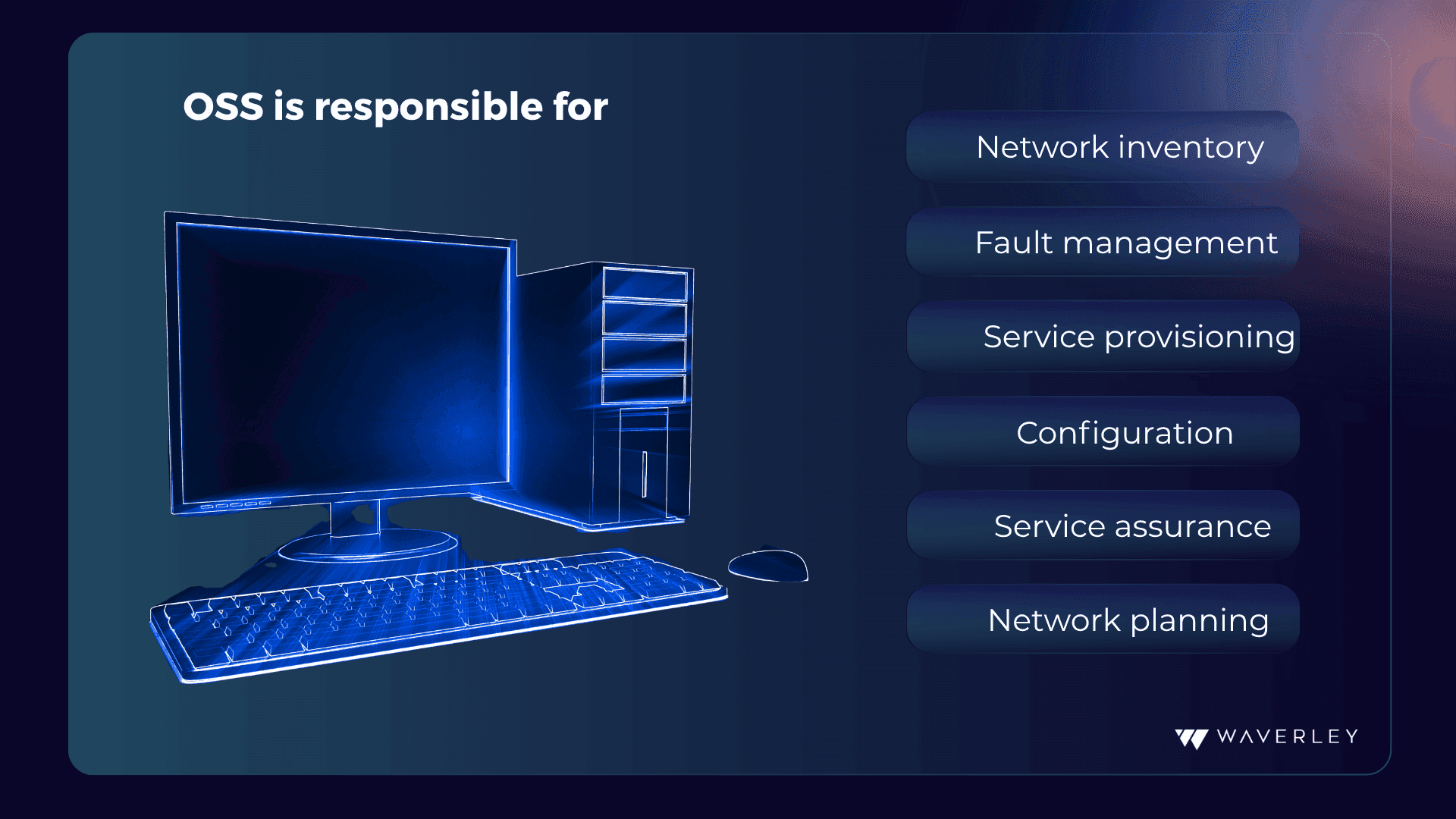
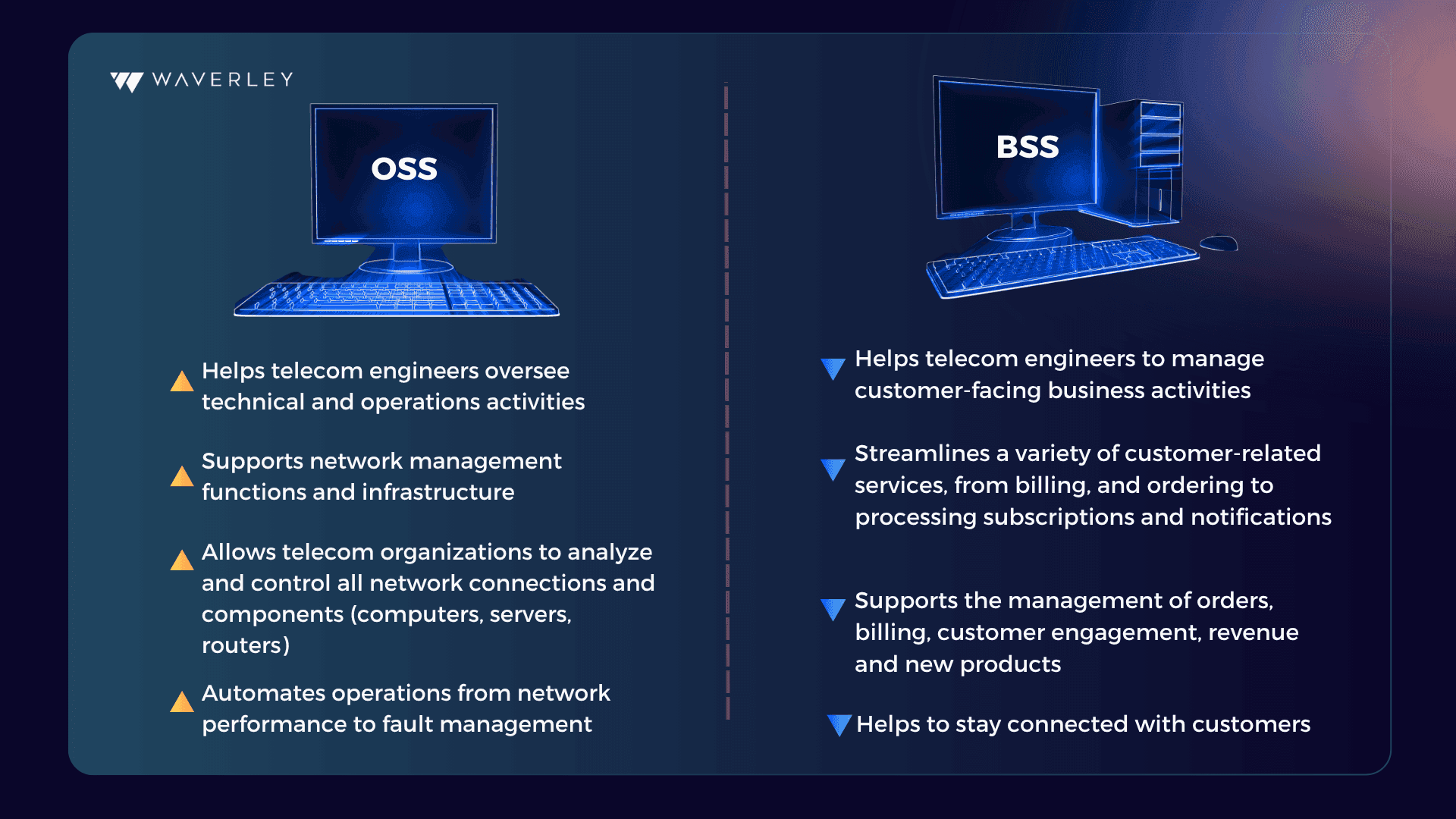
An Operations Support System (OSS) is used by the Communications Service Providers (CSP) to manage their networks. An OSS system supports several functions required to manage a telecommunication network:
- service provisioning and activation
- network inventory
- fault management
- network configuration
What is BSS?
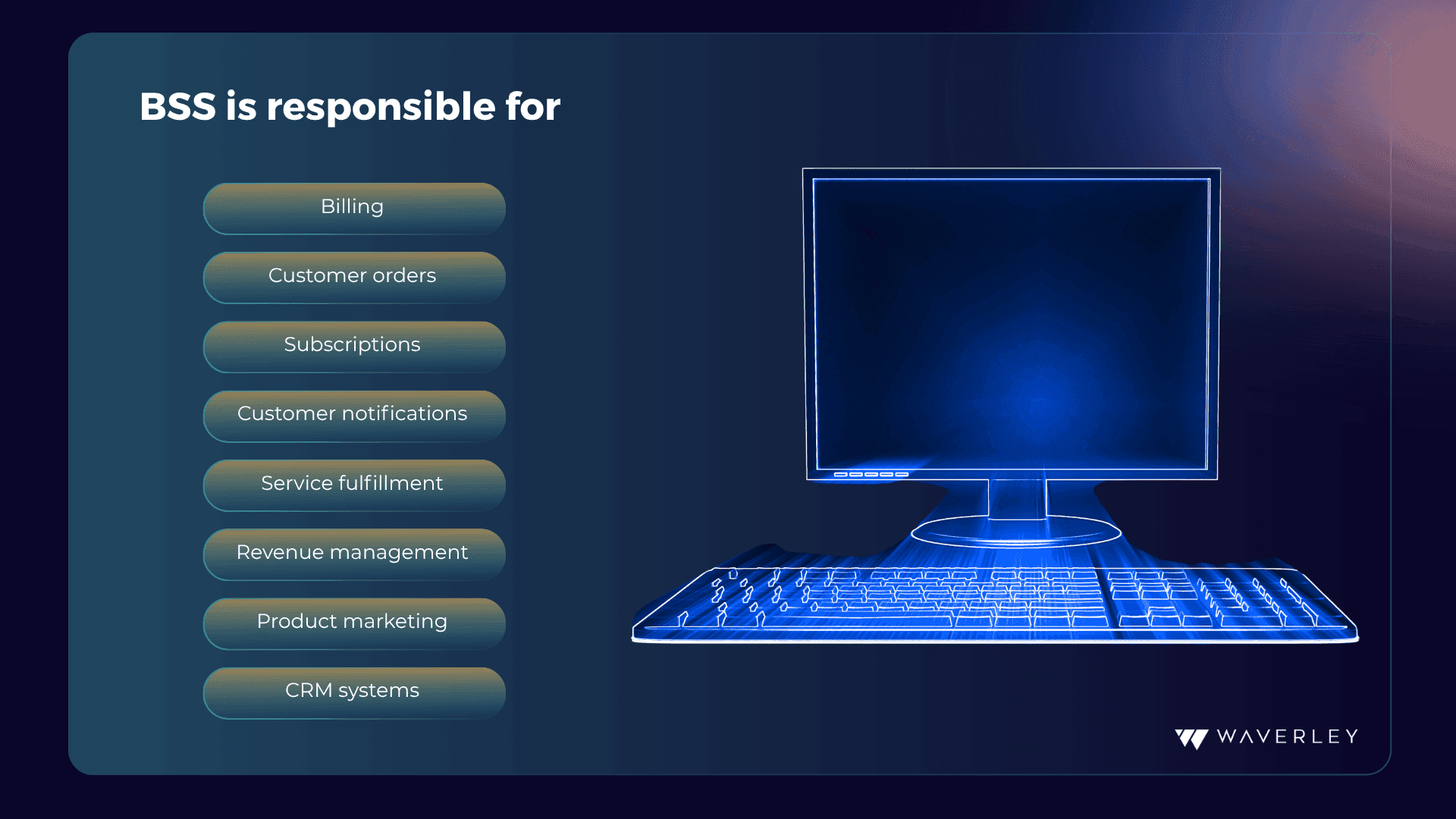
Business Support Systems (BSS) are used by telecommunication companies to run business operations that face customers, including billing, order management, customer care, and customer relationship management (CRM). BSS focuses on:
- revenue management and billing
- product catalog management
- customer relationship management (CRM)
- order management