Analyzing Waverley Software’s business, our range of services is definitely not the one that can casually cross one’s mind while grocery shopping or strolling along the street. Thus, an office in a mall or city center would not make sense. On the contrary, our target customers are business owners willing to do research, receive a consultation, and build trust with the future vendor before making any decisions. These conditions prompt that our firm’s business model should rather be centered around online space without location bias, a network of sales representatives, and personal communication.
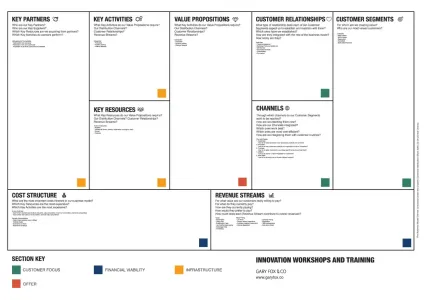
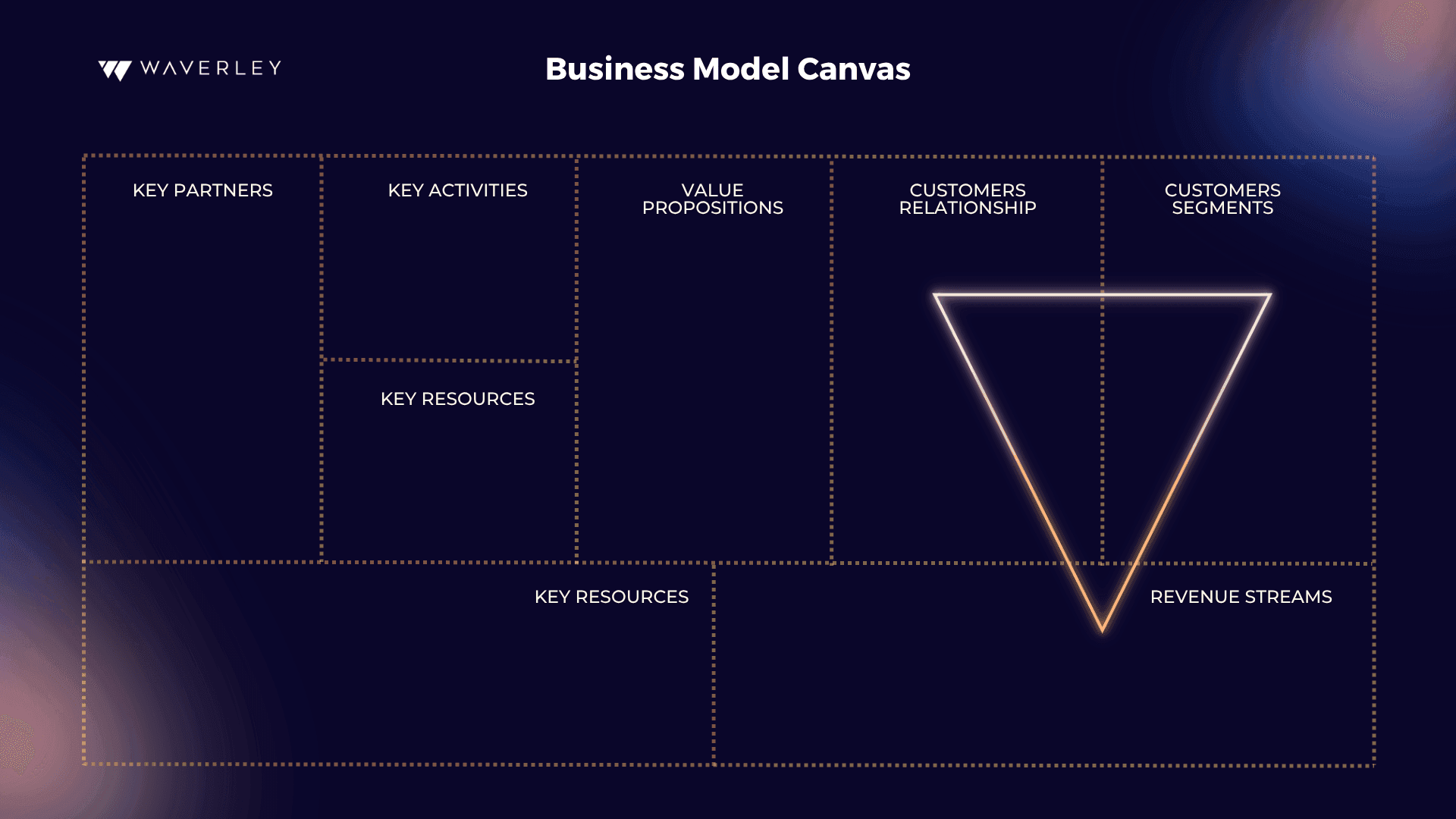
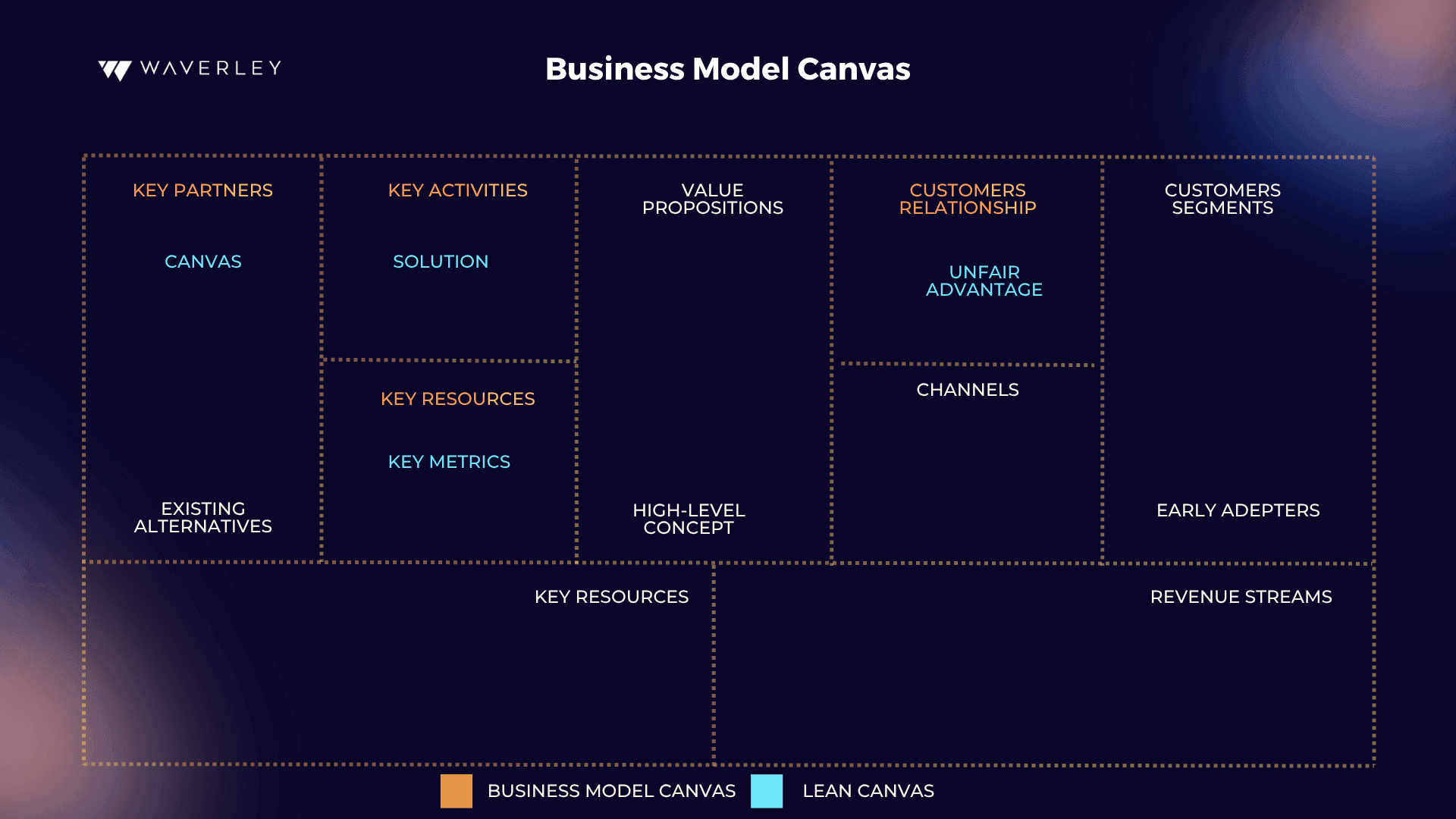
Customer relationships is the key business model component in building customer loyalty and trust with clients. It is your way of retaining current customers and attracting new ones. Try to think about which channels you use to communicate with your target audience – commercials, social media posts, digital ads, fliers, events – in the modern world, there’s a myriad of ways to reach out to your prospects and clients. This aspect also includes a range of ‘smarketing’ tricks and methods, starting with special discounts and loyalty programs and ending with how you literally communicate with your customers through social media and customer support, for example. In fact, even the most innovative business models completely reliant on software algorithms or only serving as mediators, are still highly reliant on customer satisfaction and feedback, in the end.
For tech companies such as Waverley and alike, customer relationships spin around direct communication: dedication and commitment to our clients’ projects, the ability to take responsibility for both success and faults, and, of course, provide timely technical support or problem solutions. Our clients often pay special tribute to the proactive approach, care, and ease of communication on the part of our team members. However, apart from this, we need to pay attention to our prospects’ digital experience – by keeping our website content up-to-date and relevant, for example – an element so important nowadays and often neglected by big old-established companies with traditional business models.
Core capabilities and resources include the company’s physical, financial, and intellectual assets that it relies on when operating. They are crucial in the process of business model generation, as these elements define the company’s ability to occupy its place in the market and remain sustainable. By knowing its core capabilities and competencies well enough and having control over its resources, a business can better adapt to fluctuating market demands and trends or embrace industry changes more easily, thus gaining a competitive advantage.
The core capability of Waverley Software, for instance, is expertise in a variety of modern technologies and the software development process. This makes our people – developers, QA engineers, project managers, business analysts, designers – everyone who participates in project delivery, our key asset. Taking care of this asset by stimulating their professional growth and interest in modern IT market trends is the company’s input into its business model sustainability.
The cost structure of a business defines its fixed and variable expenses on the operation which directly impact the formulation of product or service pricing. Reaching cost leadership in the market by reducing these expenses to the minimum and retaining high, or at least plausible, quality of products or services at the same time is the ultimate goal of many business owners. This can give a business a competitive advantage of the lowest prices and let it win more customers. Alternatively, a company may reach higher than average profitability by increasing the margin instead of targeting for lowest prices.
For example, software development companies try to optimize their cost structure by lowering their expenses on their key resource – the engineering talent. This strategy made it possible for the IT industry to flourish in low-income regions of the world with high or relatively high education levels–the countries of Latin America, Eastern Europe, and South-East Asia. At the same time, businesses in need of software development expertise and tech startups became able to save costs on digital transformation and innovation. A win-win situation. Waverley Software manages to leverage the technology talents’ strengths from all parts of the world and deliver top-quality engineering services to its customers at reasonable rates.
Revenue streams are the sources that generate revenue and form the revenue model of a business. The higher scale a business, the more revenue streams it usually has. By defining its revenue streams, a company identifies what it sells, to whom, by which means, and at what pricing. Knowing and understanding the company’s revenue streams, business owners keep constant control over financial flows and can see the big picture when thinking of business model innovation to optimize or increase profitability as the business evolves.
In the software development and technology innovations domain, revenue streams are particularly interesting. For example, many software applications are free to download, install, and use, but they generate revenue through in-app purchases or by showing third-party ads to users. This is the principle of work of the advertising business model. Or, the basic features are free to use while a wider set of critical features becomes available after payment – this is an example of a freemium business model. Software development vendors, such as Waverley, typically work following the rental model or fee-for-service model, with the staff itself or their service for other companies or startups making up the main revenue streams for development vendors.
The partner network of a companyconsists of other businesses that it relies on and can’t do without – external consultants, suppliers, and contractors which cover the business needs that go beyond its scope. With business model innovation and company growth, it can expand its structure and move some or all of its operations in-house. But complete independence is what only business giants can afford. Plus, partnerships always mean a broader choice of opportunities and better service quality – why refuse from it? This makes the partner network an important and common element of a business model.
Software development companies often rely on partnerships when it comes to marketing and PR, legal consulting, personnel management and recruitment, and technology innovation. They also play the role of partners themselves when helping other businesses go digital, automate their operations, fill in expertise gaps, provide tech consultations, find clients, and so on.
Now that we know something about the key elements of a business model, how can this help us further?