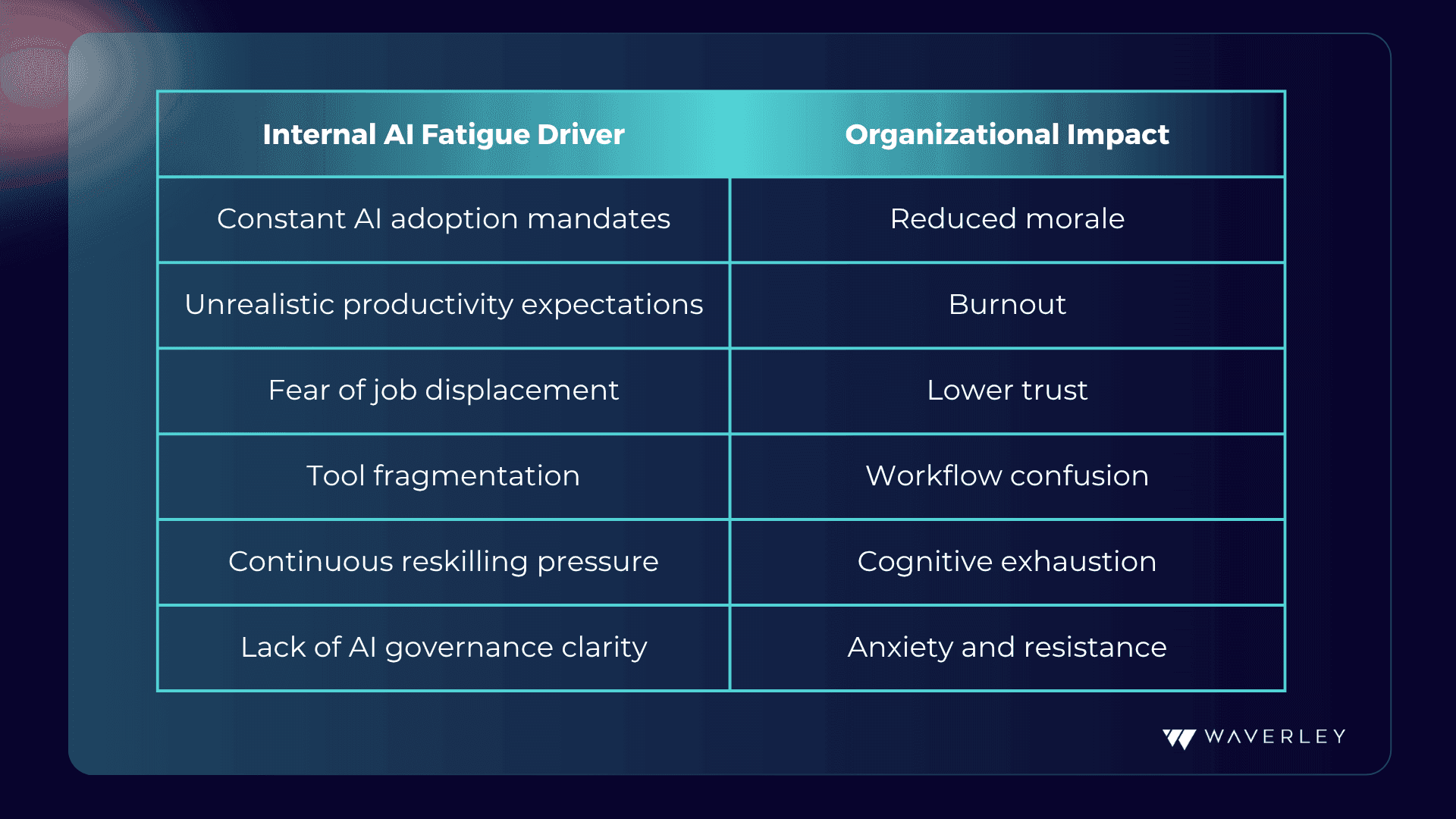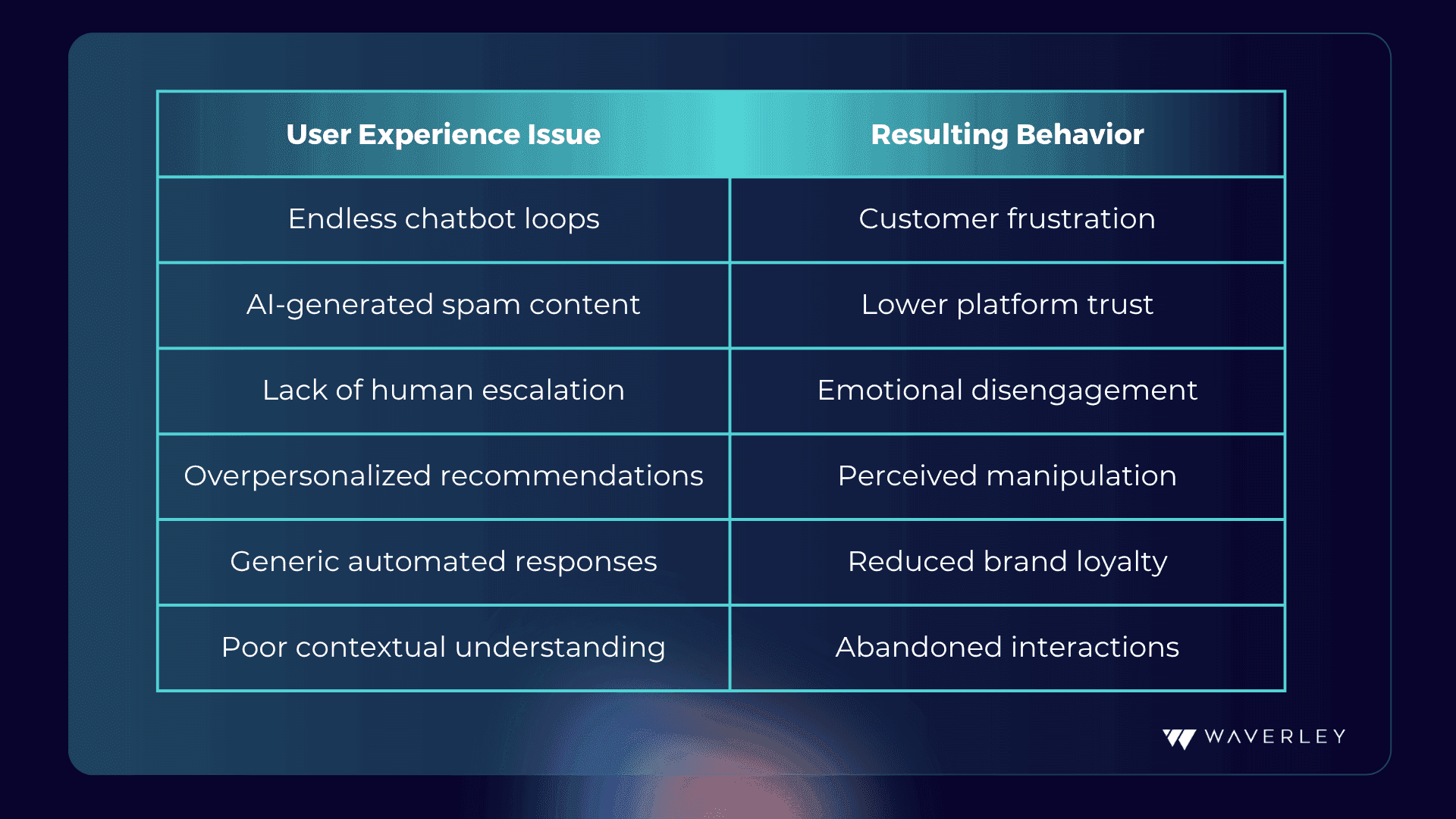
Businesses are incorporating generative AI into customer service, software engineering, analytics, content creation, and decision-making pipelines at a never-before-seen pace. However, in addition to productivity gains, another phenomenon is quietly but quickly emerging: AI fatigue. This phenomenon affects not just consumers who grow irritated with chatbots, but also internal teams under pressure to adopt AI-driven workflows, developers tasked with creating and maintaining AI systems, and external users overwhelmed by automated interactions, subpar AI content, and cognitive overload. Businesses that don't address these challenges risk weaker adoption, employee burnout, declining customer engagement, and decreased trust.
92% of businesses intend to boost AI investments over the next three years, yet only 1% believe their AI deployment is mature, according to a recent McKinsey & Company study. This disparity draws attention to an important fact: implementing AI is simple, but maintaining positive human engagement with it is more difficult.