
Logo
Artificial Intelligence

Global Teams in the AI Era: Human Connection Still Drives Performance

Learn why technology alone isn't enough and how trust, communication, and human connection continue to power successful global teams.

Michelle Galarza
Michelle Galarza
Content Writer
June 10, 202620 min read
Share
Global Teams in the AI Era: Human Connection Still Drives Performance

Today's most competitive businesses operate on a global team model, thus they are no longer an anomaly in the current business world. The way businesses expand innovation has been revolutionized by distributed engineering teams, cross-border product teams, asynchronous marketing operations, and global customer support ecosystems.

Workflows are being accelerated at a rate never seen before, thanks to artificial intelligence. AI is capable of generating code, analyzing datasets, automating documentation, summarizing meetings, and streamlining cross-time zone activities. AI may be the engine, but a healthy, coordinated, and culturally compatible human team is still the driver, despite these technical advancements.

Adopting AI tools is not enough for the companies that are succeeding globally. They are rethinking leadership, teamwork, communication, and culture to accommodate people who are dispersed throughout the world.
The Rise of the Borderless Workforce

The way businesses hire and run has been drastically altered by remote and hybrid work. In order to gain access to specialized knowledge throughout the globe, businesses are increasingly forming teams based on talent availability rather than geographic location.

Global and virtual work environments now overlap so much that businesses need to completely reconsider their traditional leadership and collaboration models, according to research from Harvard Business School.

This change is being driven by many significant changes:

  • Teams of engineers work on several continents
  • Rolling time zones are used for product launches
  • Workflows powered by AI lessen the need for physical offices
  • Businesses put talent density and speed ahead of location.

As a result, workers are more digitally linked than ever before, but they are frequently more socially dispersed.

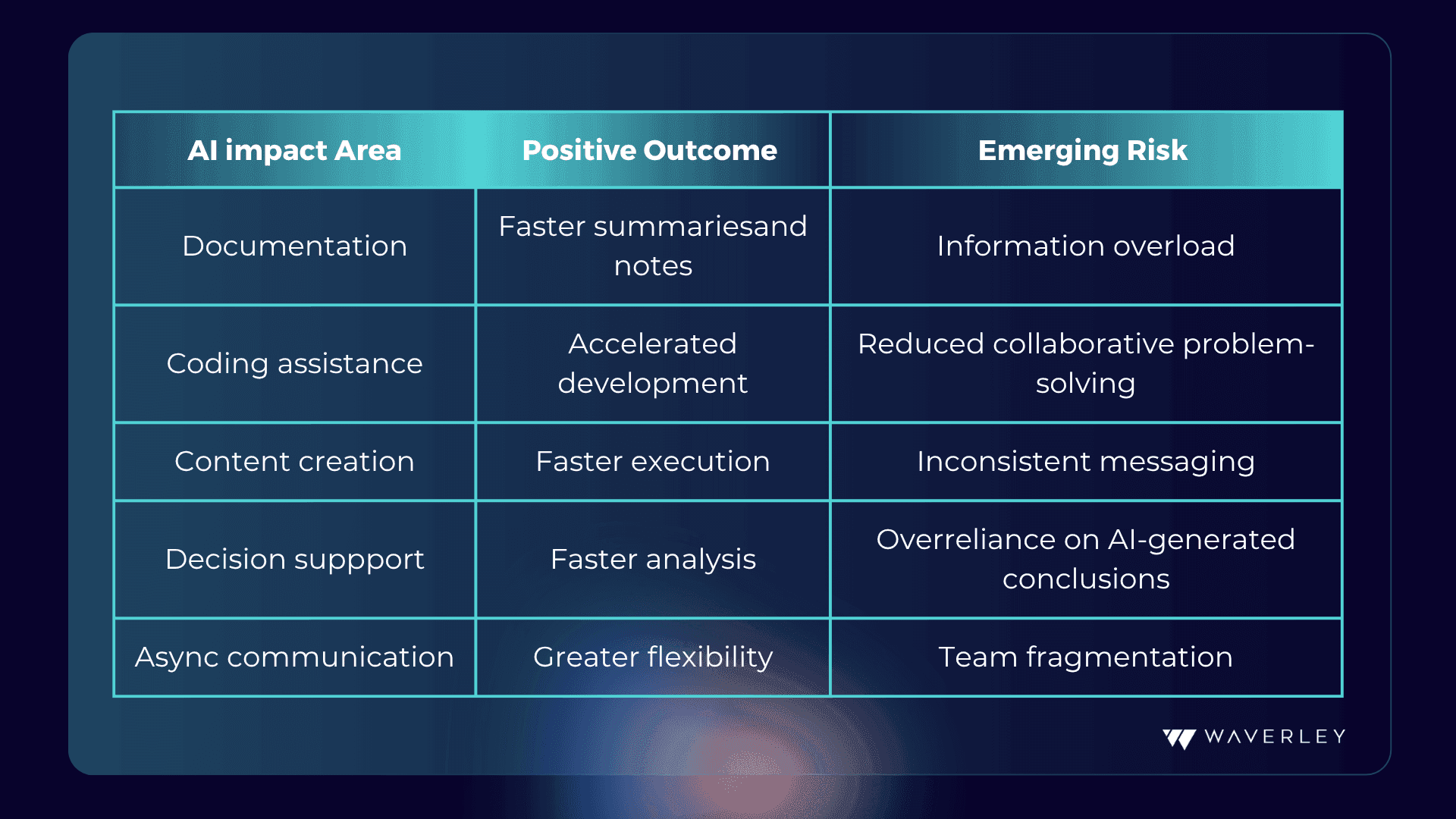
AI Is Accelerating Work — But Not Automatically Improving Teamwork

Individual productivity has significantly enhanced thanks to artificial intelligence. Higher individual productivity, however, does not automatically result in improved teamwork.

According to recent Atlassian-related workplace research, 96% of firms continued to struggle to demonstrate significant increases in team-wide efficiency or innovation, even though employees reported considerable personal productivity gains from AI.

This highlights a crucial reality: teams flourish through alignment, yet AI optimizes tasks.

Organizations run the risk of producing highly productive people working in disjointed systems if they don't intentionally synchronize.

Communication Is the Infrastructure of Global Teams

Communication is an infrastructure, not a soft talent, in distributed businesses.

Problems that colocated teams encounter less commonly than those faced by global teams:

  • Ambiguity of language
  • Responses that are slow across time zones
  • Inaccurate tone in written correspondence
  • Uneven attendance at meetings
  • Disparities in feedback approaches across cultures

Both native and non-native English speakers experience communication anxiety in international teams, which often leads to reduced engagement and ineffective collaboration, according to research from Harvard Business School on global collaboration and language dynamics.

This means that rather than relying on communication to happen organically, successful multinational corporations must consciously design communication systems.

Among the effective methods are:

  1. Documentation that is asynchronous first
  2. Unambiguous decision-making ownership
  3. Recordings of meetings and written summaries
  4. Cultural standards for communication
  5. Clear routes for escalation

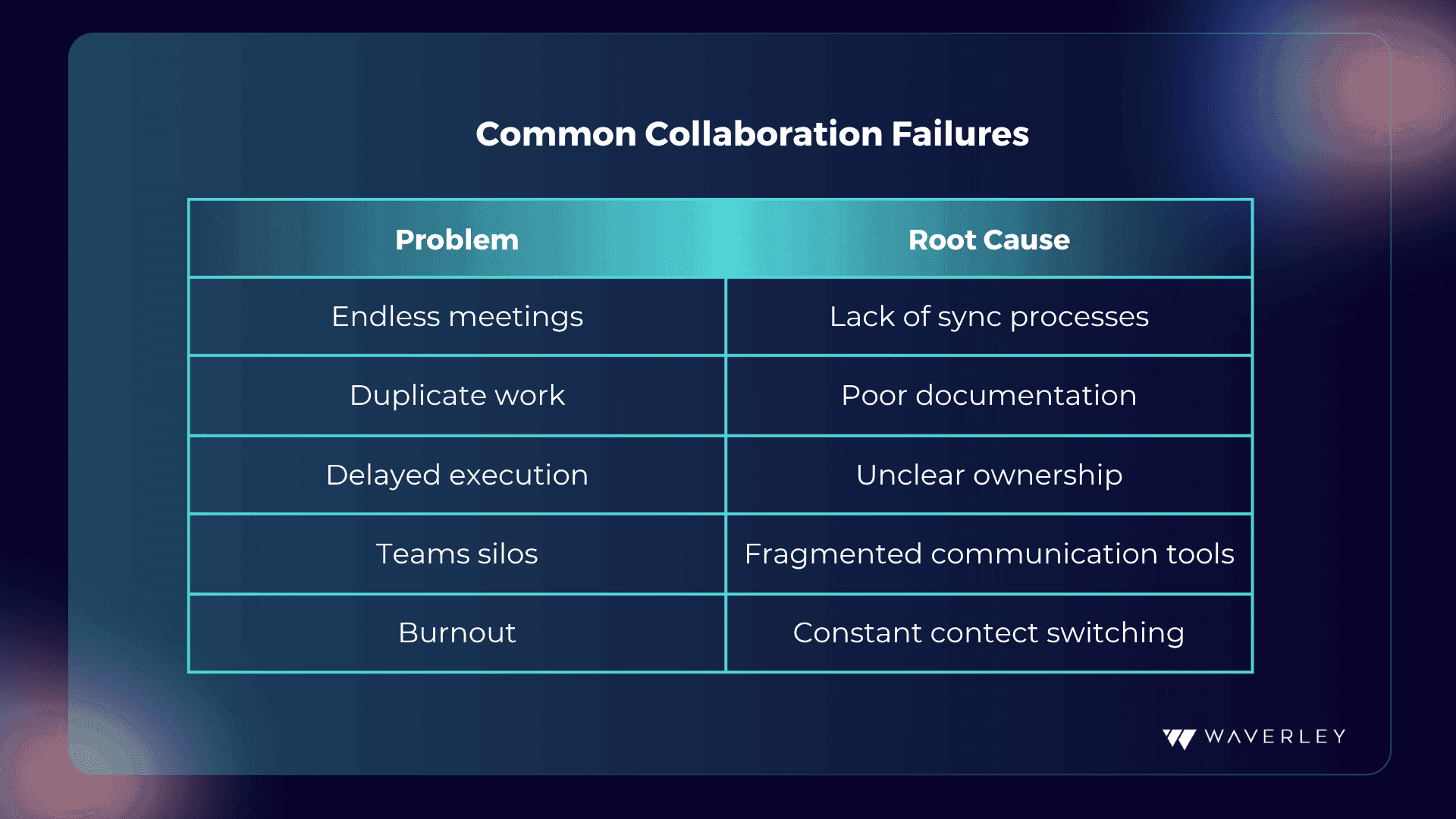
Companies that don't standardize their communication frequently face delayed execution, mistrust, and redundant work.

Culture Cannot Be Automated

While AI can speed up paperwork, automate processes, and improve communication in dispersed settings, it is unable to replace the human components that support productive international teams. No platform or algorithm can perfectly replicate the very human dynamics of trust, empathy, belonging, and psychological safety. The idea that collaboration tools automatically produce culture is one of the most prevalent misunderstandings in contemporary digital organizations. In actuality, culture is formed by frequent encounters, common experiences, open leadership, and dependable communication techniques that foster a sense of community among staff members despite geographical separation.

According to research published in the Harvard Business Review, leadership strategies that work well in one area might not work well in multicultural settings because cultural norms on collaboration, hierarchy, and communication styles differ greatly. Strong international organizations are aware of this complexity and purposefully create cultures that place a high value on shared accountability across time zones, inclusive engagement, contextual transparency, and respect for regional communication peculiarities. Successful global cultures are purposefully created by leadership conduct, operational consistency, and ongoing human connection rather than developing organically.

Collaboration Requires More Than Tools

While underinvesting in collaboration behavior, many firms make significant investments in collaboration platforms.

Although the market for collaboration software is still expanding quickly, workers are increasingly complaining about fragmented workflows, tool fatigue, and notification overload. According to reports from the community and industry, a large number of remote workers currently use several separate platforms for communication on a daily basis.

Instead of increasing platforms, the most successful international teams streamline collaboration.

Fewer systems, well-defined workflows, centralized information, documented procedures, and shared operational visibility are their top priorities. Instead than adding more coordination labor, technology should lessen friction.

Time Zones Are an Operational Strategy Problem

Time zones are actually practical design issues, but they are frequently handled as scheduling inconveniences.

Workflows in high-performing multinational corporations are purposefully organized around geographic distribution. They create systems that facilitate asynchronous continuity rather than imposing continuous overlap.

For instance:

  • Development cycles are transferred between regions by engineering teams
  • Customer service is always available on all continents
  • Asynchronous product reviews are conducted with recorded comments
  • Recorded communications are used to disseminate leadership updates

Additionally, an increasing amount of studies indicates that distributed collaboration alters the process of creativity. When conceptual work gets too fragmented, remote collaboration may hinder the production of ground-breaking ideas, according to studies that examined millions of research articles and patents.

For this reason, businesses are increasingly saving complicated ideation sessions, innovation workshops, and strategic brainstorming for higher-overlap collaboration windows.

The Human Side of AI Adoption

Many firms place a lot of emphasis on putting AI technologies into practice while ignoring emotional adoption, one of the most important aspects of transformation. Employees frequently feel uncertain about their future roles, anxious about learning new systems, under pressure to maintain consistent productivity, and confused by quickly changing workflows as AI becomes more and more incorporated into daily operations. Employees sometimes spend a significant amount of their day managing disjointed AI platforms and manually filling in gaps between systems rather than fully benefiting from automation itself. Instead of working in completely streamlined workplaces, employees are increasingly acting as "human middleware" between fragmented AI systems, according to recent workplace data from TechRadar.

This leads to a major paradox in contemporary organizations: whereas AI is intended to promote productivity, poorly planned deployment tactics may instead make operations more difficult and frustrate employees. In order to overcome this obstacle, high-achieving international teams use AI through organized governance, human supervision, ongoing training initiatives, precise usage guidelines, and open communication about how roles could change over time. The most resilient companies present AI as an augmentation tool that improves human capabilities, fosters cooperation, and frees up individuals to concentrate more on strategic thinking, creativity, and decision-making rather than as a substitute for human talent.

Leadership in Global Teams Requires Cultural Intelligence

Compared to managing colocated workplaces, managing distant teams necessitates a very different leadership paradigm.

The capacity to modify communication, management style, and decision-making methods in different cultural situations is a skill that leaders must acquire.

A large portion of the global workforce functions in more collectivist and hierarchical cultures, which is why many classic Western leadership presumptions fail, according to global leadership studies published through Boston University Insights and Harvard Business Review.

A strong blend of cultural knowledge, adaptability, empathy, transparency, and the capacity to lead asynchronously across dispersed contexts are all necessary for effective leadership in global teams, which goes well beyond task management and productivity monitoring. Leaders that are aware of cultural variations are better able to foster deeper collaboration and lessen communication friction between areas with disparate expectations, work styles, and communication norms. While empathy helps lessen the social distance that frequently arises in remote and cross-border teams, adaptability enables managers to efficiently respond to continuously shifting global dynamics. However, when teams significantly rely on asynchronous communication and independent execution, transparency is crucial for preserving operational clarity, alignment, and trust across time zones. The job of leadership is changing dramatically in this changing environment: the future global leader will be a synchronizer of dispersed human systems capable of maintaining worldwide alignment of people, communication, culture, and strategy rather than merely a supervisor of workflows.

AI + Humans: The Most Effective Model Is Collaborative

AI is not taking the place of teams in the most prosperous companies. They are rethinking teamwork in terms of human-AI cooperation.

Human-AI teams greatly improved productivity and communication efficiency while enabling humans to concentrate more on creative work, according to recent field studies with over 2,000 participants.

But those same investigations also revealed that:

  • In certain creative and intellectual domains, human-only teams continued to perform better than AI-assisted teams
  • CWorkflow design was crucial to AI efficacy
  • In situations with AI assistance, communication habits drastically changed

This reaffirms a crucial idea that AI increases the ability to carry out tasks, but humans are still in charge of judgment, creativity, trust, and strategic direction.

AI will not compete with humans in the workplace of the future. It is intelligent automation combined with coordinated human systems.

Burnout Is Becoming a Global Operations Risk

Many firms have miscalculated the new productivity problems brought about by distributed work settings. Employees frequently have very little free time for in-depth, concentrated work due to fragmented schedules, constant meetings across time zones, constant availability, and notification overload. Global collaboration expands operational reach and flexibility, but it can also make it harder to distinguish between work and personal time, increasing the operational risk of burnout for remote teams.

Many companies are establishing asynchronous communication standards, cutting back on pointless meetings, safeguarding concentrate time, and utilizing AI to automate tedious administrative work in order to address this problem. Long-term productivity, innovation, and team retention are all improving for businesses that promote sustainable workloads and better collaboration techniques.

The Future of Global Teams Will Be Hybrid, Intelligent, and Human-Centered

Global organizations of the future will probably function via a hybrid environment that includes:

  1. Human groups
  2. AI agents
  3. Systems of automation
  4. Distributed processes
  5. Structures for asynchronous collaboration

According to McKinsey's workplace AI research, AI has the potential to boost global productivity by trillions of dollars. However, even large AI-driven companies are starting to highlight the special qualities of humans:

  1. Evaluation of Creativity
  2. Setting a vision
  3. Building trust
  4. Making moral decisions

Successful businesses won't just use more AI tools.

They'll construct:

  1. Improved ways of communication
  2. Stronger international cultures
  3. Improved regional synchronization
  4. More intelligent frameworks for collaboration
  5. Operational models with a human focus

Conclusion: AI Is the Engine, but Humans Still Drive the Organization

As global organizations continue integrating AI into their operations, the companies that will succeed long term are not simply those with the most advanced technology, but those capable of building healthy, synchronized, and culturally aligned teams across regions and time zones. AI can accelerate workflows, automate processes, and improve operational efficiency, but human collaboration remains essential for trust, creativity, communication, strategic thinking, and decision-making. The future of global work will depend on organizations that balance intelligent automation with strong leadership, clear communication, and resilient team culture — because while AI may be the engine driving modern operations, people are still the force that gives organizations direction, alignment, and purpose.

About the author & stay in touch
Michelle Galarza
Michelle Galarza
Content Writer

Michelle is a Bolivia-based communications professional and linguist with a passion for technology, social impact, literature, design, and photography. Through strategic communication and storytelling, she helps bridge the gap between innovation and people, with a particular interest in showcasing Latin American tech talent, highlighting emerging trends in the digital industry, and exploring the impact of technology on businesses and society.

Stay up to date

Subscribe to Waverley's newsletter and stay up to date with the latest articles.

Let's Work Together

Empower global teams with AI and human connection.

Let's talk about your project.

Contact Us