
Logo
Cloud

Cloud 3.0: From Migration to Optimization

Discover how Cloud 3.0 is transforming cloud migration into a strategy for optimizing workloads across hybrid, multi-cloud, edge, and on-premises environments.

Michelle Galarza
Michelle Galarza
Content Writer
July 29, 202623 min read
Share
Cloud 3.0: From Migration to Optimization

The third significant evolution of the cloud sector is about to begin. Infrastructure virtualization and cost-cutting were the main priorities of the first era. The second focused on cloud-native development and public cloud usage as a means of digital transformation. Organizations are already embracing Cloud 3.0, a new paradigm in which cloud environments are seen as intelligent, distributed platforms that balance performance, governance, sovereignty, AI workloads, resilience, and business outcomes rather than as destinations.

Cloud 3.0 migration is more than just any cloud migration project. It signifies a major change from "moving workloads to the cloud" to "optimizing workloads across the right combination of cloud, edge, private, and on-premises environments."

More than half of enterprise workloads currently run in public cloud environments, and strategic roadmaps continue to favor hybrid and multi-cloud architectures, according to recent industry studies about the latest 2026 State of the Cloud Report. At the same time, cloud pricing, governance, AI infrastructure requirements, and vendor dependency are becoming more and more of a problem for enterprises.
Understanding What Cloud 3.0 Actually Means

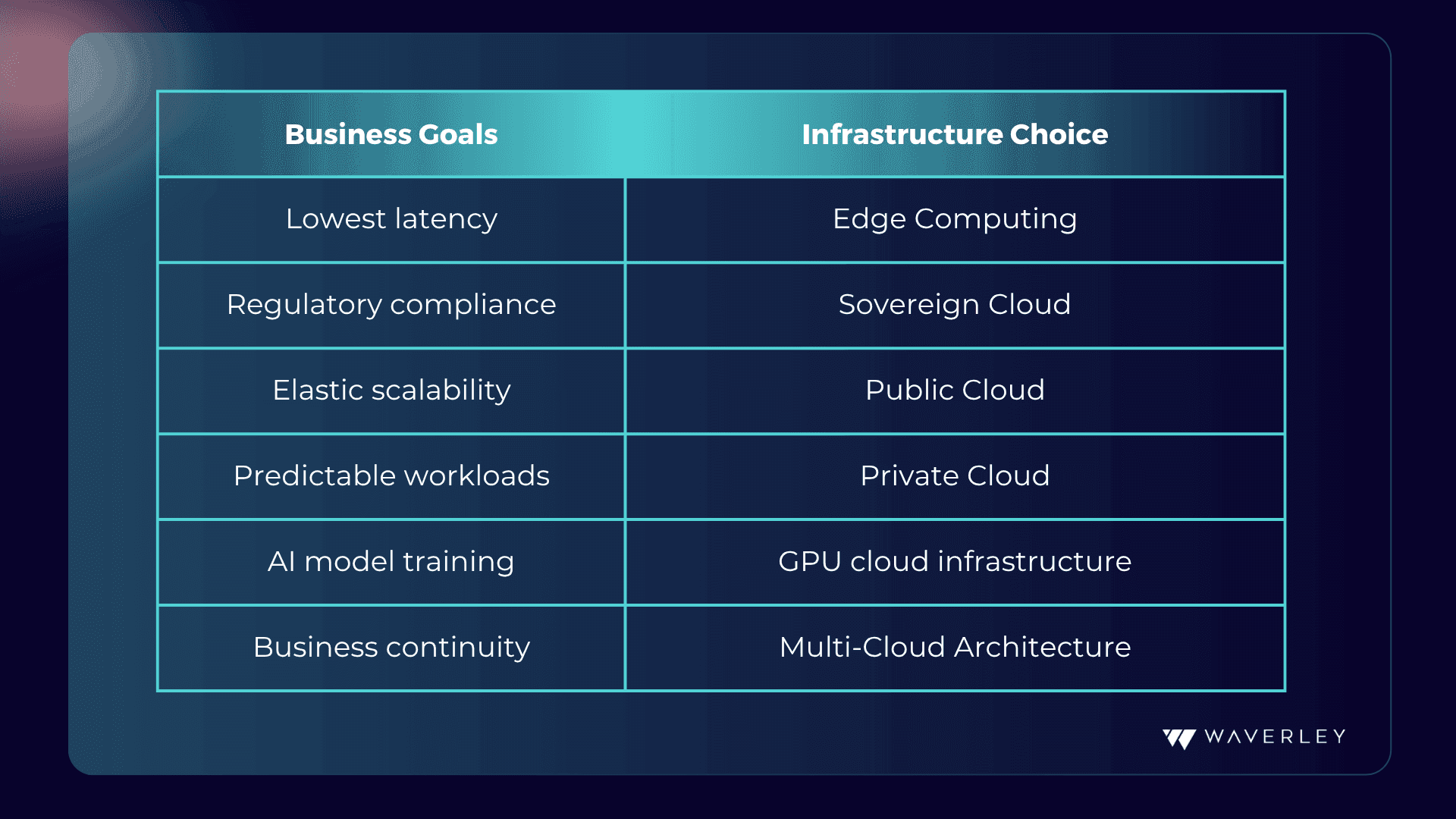
The phrase "cloud 3.0" refers to a multi-cloud operating paradigm that is intent-driven and bases infrastructure choices on business goals rather than provider capabilities.

In contrast to previous cloud methods, Cloud 3.0 includes:

  • Platforms for public clouds
  • Infrastructure for private clouds
  • Environments for edge computing
  • Almighty clouds
  • AI-enhanced infrastructure
  • Frameworks for automated governance

Cloud 3.0 is increasingly being described by industry observers as a future in which businesses distribute workloads according to certain objectives, like:

Getting Started with the Cloud

Instead of posing the question, "Which cloud provider should we use?" Cloud 3.0 companies ask, "Which environment best serves this workload?"

Why Traditional Cloud Migration Strategies Are No Longer Enough

Businesses used a "lift-and-shift" approach to migration for many years.

Applications were transferred to the cloud with no architectural modification, which frequently resulted in short-term gains but did not optimize long-term value.

The restrictions are now more apparent:

  • Growing operating expenses
  • Concerns about vendor lock-in
  • Complexity of security
  • Bottlenecks in performance
  • Fragmentation of governance

According to Flexera research, 84% of businesses now cite managing cloud spend as their greatest cloud challenge, despite the fact that cloud budgets are still increasing yearly.

Organizations frequently found that workload migrations by themselves did not always result in business value. Rather, relocation frequently caused historical inefficiencies to be repeated in a new setting.

As a result, rather than just moving infrastructure, modern migration programs increasingly concentrate on re-platforming, re-architecting, cloud-native modernization, platform engineering, and operational efficiency.

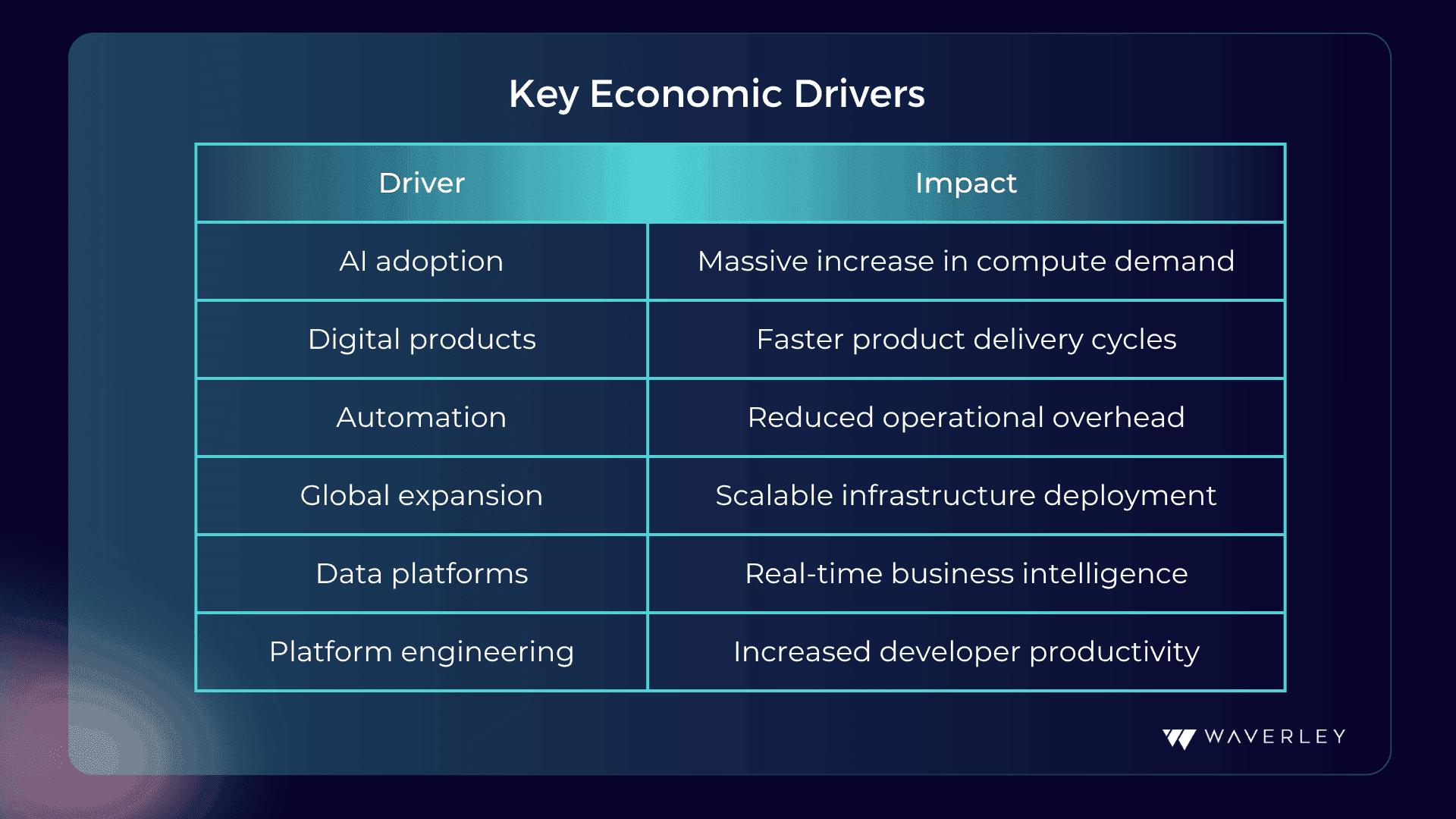
The Economic Drivers Behind Cloud 3.0

Cloud migration discussions have shifted dramatically from technology conversations to financial conversations.

A decade ago, cloud adoption was frequently justified through infrastructure savings. Today, executives expect measurable business outcomes.

According to research from McKinsey, cloud adoption could unlock more than $1 trillion in value for Fortune 500 companies, with most of that value coming from business innovation and operational optimization rather than pure IT cost reduction.

Cloud computing is being viewed more and more as a platform for corporate expansion rather than just an infrastructure solution.

The Rise of Hybrid and Multi-Cloud Architecture

The rejection of the "single-cloud" paradigm is one of Cloud 3.0's distinguishing features.

Companies are using multi-cloud and hybrid models more frequently to balance Cost, performance, resilience, compliance, and geographic needs.

About 70% of businesses currently use hybrid cloud strategies, which combine public and private cloud environments, according to a recent cloud study.

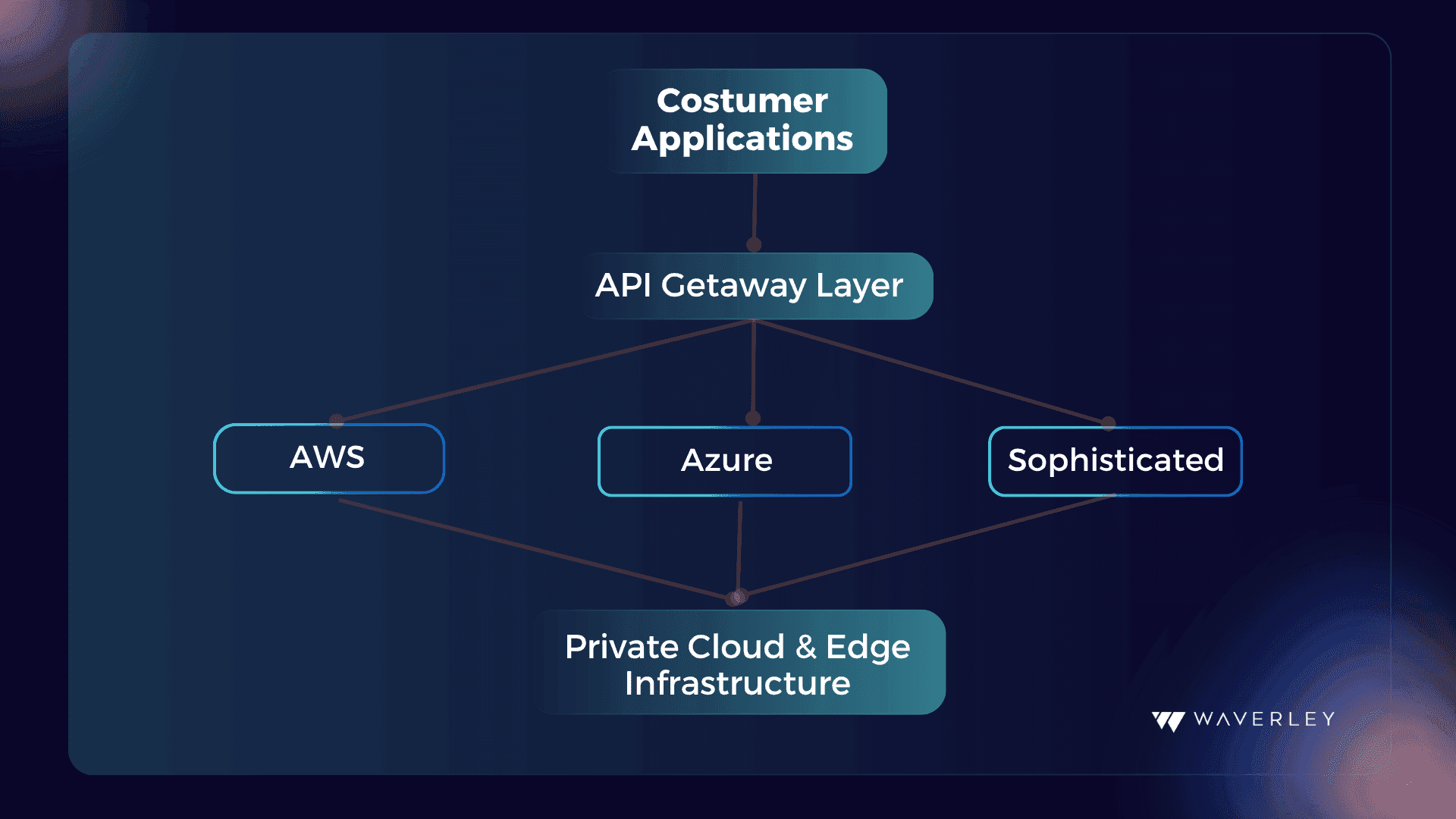
An example of a contemporary enterprise architecture would be:

This distributed architecture allows workloads to be placed where they deliver the greatest value.

AI Is Reshaping Cloud Migration Priorities

Cloud 3.0 migration is most likely being accelerated by artificial intelligence.

Businesses are quickly transitioning from testing AI to implementing it in production.

New criteria are created by this transition:

  • Demands for Infrastructure
  • clusters of GPUs
  • Systems for high-speed storage
  • Vector databases
  • Large-scale data pipelines
  • Architectures for distributed inference

Spending on cloud computing related to AI workloads is still increasing dramatically. According to industry forecasts, cloud infrastructure investment surpassed $399 billion in 2025 and, as AI adoption picks up speed, might reach $500 billion in 2026.

Cloud migration initiatives that neglect to include AI readiness may ultimately require costly rework.

Cloud Repatriation: The Unexpected Cloud Trend Reshaping Enterprise Strategy

Adoption of the cloud was once thought to be a one-way process. With the belief that scalability, flexibility, and operational efficiency would follow naturally, organizations were urged to transfer as many workloads as possible to public cloud environments. But as cloud usage grew, businesses realized that not all workloads would profit equally from a public cloud deployment architecture.

Cloud repatriation is one of the most important developments in contemporary cloud architecture as a result of this insight.

The Flexera 2025 State of the Cloud Report states that businesses are continuing to increase cloud usage while also reevaluating where particular apps should be located in order to optimize performance, compliance, and cost effectiveness.

The paradigm for making decisions about workload distribution has evolved, not the usefulness of cloud computing per se.

This trend is being driven by a number of factors.

  • Cost Predictability
  • Public cloud platforms provide unmatched flexibility, but large-scale cost forecasting can be challenging. Dedicated infrastructure often results in a cheaper total cost of ownership (TCO) over several years for organizations with steady, predictable workloads.

    For instance:

    • Large-scale databases
    • Systems for enterprise resource planning
    • Data storage facilities
    • AI training settings

    Can result in high costs for cloud computing, storage, and egress.

    These days, a lot of businesses regularly examine workload allocation to decide whether to move some apps to different settings or keep them in the cloud.

  • Regulatory and Sovereignty Requirements
  • Regulations pertaining to data sovereignty are still changing in a number of sectors, including government, financial services, healthcare, and telecommunications.

    Businesses that operate internationally frequently have to comply with:

    • Data ownership and residency
    • SControls for encryption
    • Governance of jurisdiction

    Sovereign cloud initiatives are therefore starting to appear all over the world.

    While many businesses still maintain private environments for highly regulated workloads, major cloud providers have responded by introducing sovereign cloud options.

  • AI Workloads and Infrastructure Economics
  • Artificial intelligence is creating entirely new infrastructure considerations.

    Training large language models, recommendation engines, and predictive analytics systems requires substantial GPU capacity. Depending on utilization rates, organizations may achieve better economics through dedicated GPU clusters rather than continuous public cloud consumption.

    This has introduced a hybrid AI model where:

    • Model development occurs in cloud environments.
    • Training workloads may leverage dedicated GPU infrastructure.
    • Inference services operate across cloud and edge platforms.

    As AI investments continue to accelerate, workload placement decisions are increasingly driven by computational economics rather than cloud-first mandates.

Governance, FinOps, and Security Become Foundational Cloud Disciplines

During the past ten years of cloud adoption, one of the most crucial lessons discovered is that technology by itself cannot ensure effective results.

After achieving their speedy cloud migration objectives, several firms faced difficulties with cost overruns, operational complexity, security vulnerabilities, and uneven governance.

Governance is evolving from a compliance exercise to an architectural problem as businesses move into the Cloud 3.0 era.

Three interrelated disciplines are forming the foundation of the contemporary cloud operation model:

  • AI Workloads and Infrastructure Economics
  • The financial operational framework for cloud systems is now known as FinOps.

    Cloud consumption is usage-based and dynamic, in contrast to traditional IT budgeting. Without accountability and awareness, companies can quickly accrue wasteful spending.

    A well-developed FinOps practice concentrates on:

    • Optimization of resource consumption
    • Right-sizing computational resources
    • Management of the storage lifespan
    • Budgeting and forecasting
    • Allocating costs by group or department
    • Cloud ROI calculation

    Managing cloud spending remains the biggest issue businesses worldwide report, according to Flexera.

  • Security as Code
  • Security procedures now go far beyond the conventional perimeter-based methods. Security measures must be incorporated straight into deployment pipelines for cloud-native environments.

    Contemporary businesses are adopting:

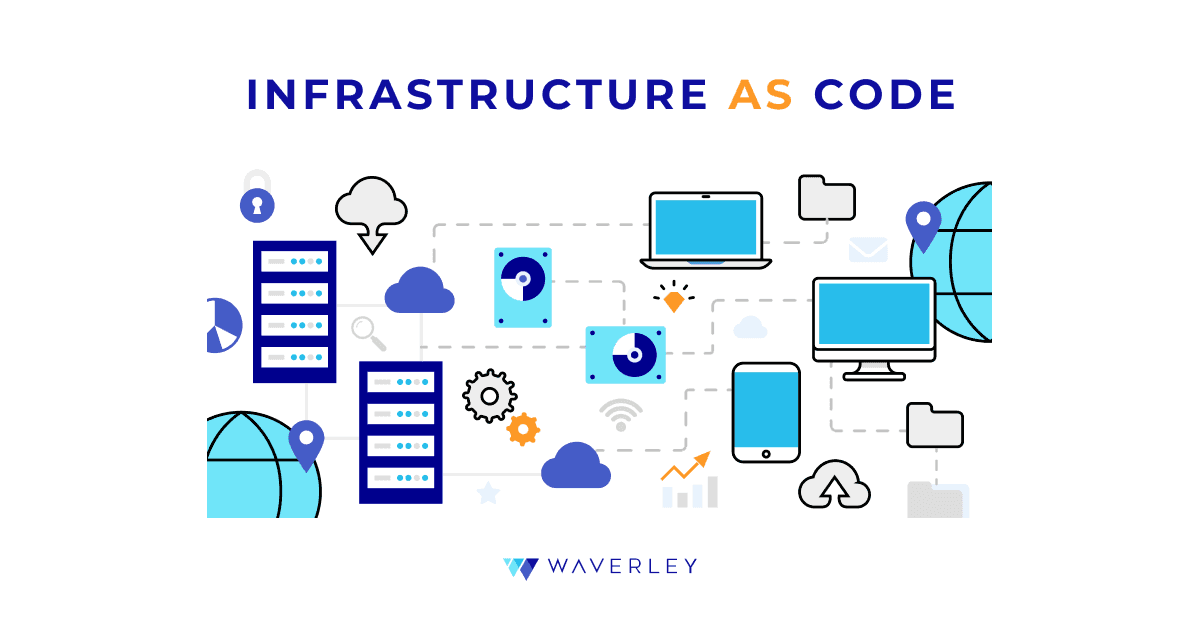
    • Policy as Code and Infrastructure as Code (IaC)
    • Constant observation of conformity
    • Architectures with zero trust
    • Automated repair of vulnerabilities

    After deployment, security is no longer something that is implemented. It needs to be integrated at every stage of the software delivery process.

  • Platform Engineering
  • One of the most significant developments in enterprise technology is platform engineering. Platform teams build standardized self-service environments that increase productivity while upholding governance requirements, rather than forcing development teams to deal directly with infrastructure complexity.

    Platform engineering is widely seen by industry observers as the enterprise-scale progression of DevOps.

Building a Cloud 3.0 Migration Roadmap

Large-scale migration events rarely result in successful cloud transitions.

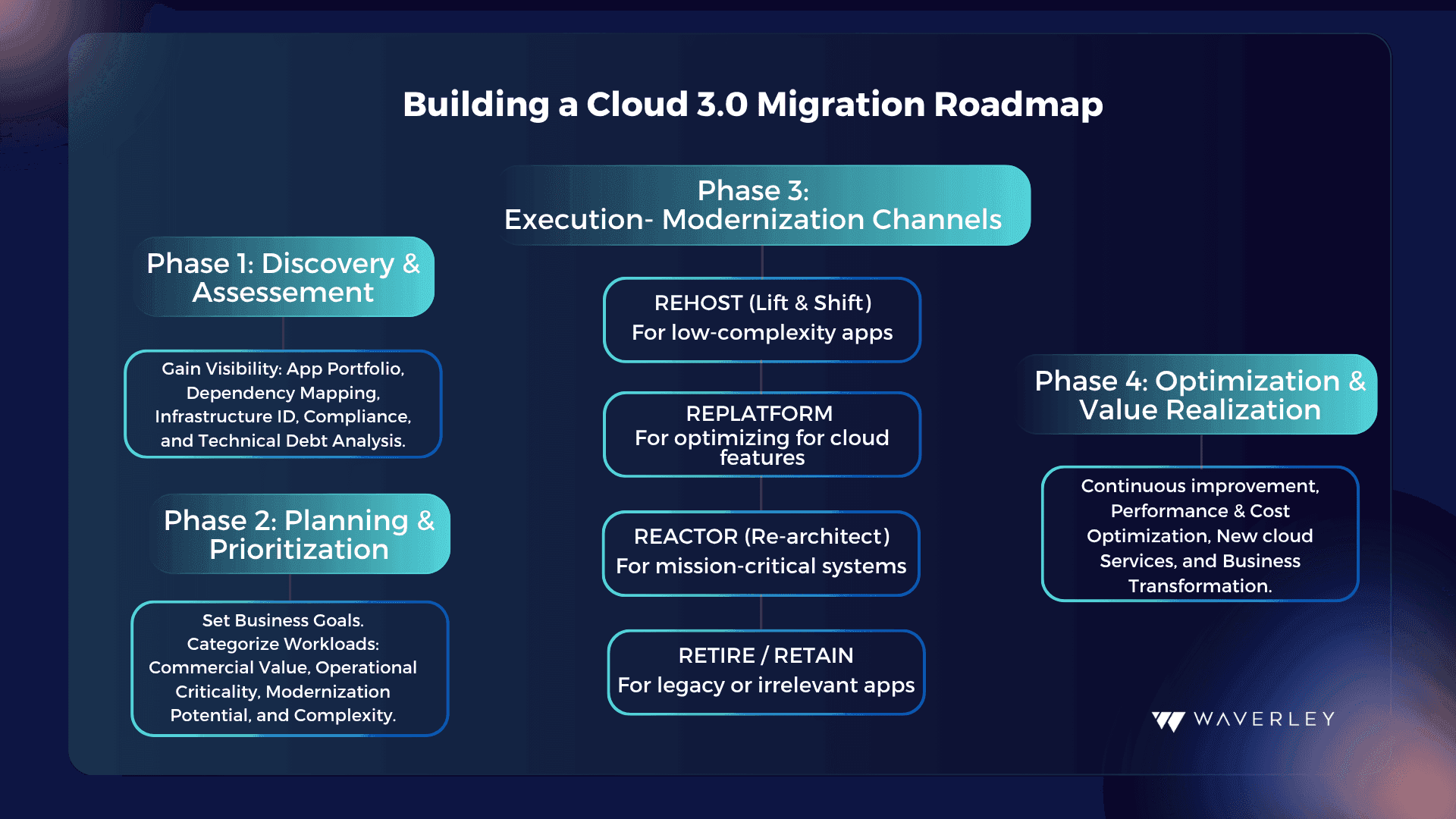
Rather, they are carried out through meticulously planned modernization plans that match quantifiable business goals with technology initiatives. The most successful companies start by developing a thorough grasp of their existing technological environment.

Application portfolio assessments, dependency mapping, infrastructure identification, compliance assessments, and technical debt analysis are frequently included in this approach. Organizations can categorize workloads based on commercial value, operational criticality, modernization potential, and architectural complexity once visibility has been created. Cloud 3.0 companies use several modernization channels instead of implementing a single migration plan for each application.

A few applications have been retired. Some are re-hosted. A lot of them are replatformed. To take advantage of cloud-native architectures, mission-critical systems may need to be completely redesigned. This stepwise strategy maximizes corporate benefit while drastically lowering migration risk.

Research from McKinsey consistently shows that organizations that approach cloud transformation as a business transformation initiative outperform organizations that treat cloud migration solely as an infrastructure project.

The Cloud 3.0 Operating Model: Platform Engineering, Observability, and Autonomous Infrastructure

While migration often receives the most attention, the long-term success of Cloud 3.0 depends on what happens after workloads have been deployed.

This is where the Cloud 3.0 operating model becomes critical.

The next generation of cloud platforms is increasingly characterized by three foundational capabilities:

  • Unified Observability
  • Massive amounts of telemetry data are produced in contemporary contexts.

    Companies need to keep an eye on:

    • Health of infrastructure
    • Performance of the application
    • AExperience of users
    • Security-related incidents
    • Cost-related metrics
  • Performance of AI models
  • Prominent companies are integrating observability into single platforms that integrate business intelligence indicators, metrics, traces, and logs.

    Cloud optimization becomes reactive rather than proactive in the absence of observability.

  • Internal Developer Platforms (IDPs)
  • Cloud 3.0 organizations increasingly deploy Internal Developer Platforms to abstract infrastructure complexity from development teams.

    These platforms provide:

    • Self-service environments
    • Automated provisioning
    • Security guardrails
    • Standardized deployment pipelines
    • Integrated monitoring

    The objective is not merely operational efficiency but accelerated innovation.

    By reducing cognitive load, developers can focus on delivering business value rather than managing infrastructure.

  • Autonomous Infrastructure and AI Operations (AIOps)
  • Cloud operations themselves are starting to change due to artificial intelligence.

    Real-time operational data analysis is done by AIOps platforms to:

    • Identify irregularities
    • Forecast outages
    • Maximize the use of resources
    • Automate the cleanup process
    • Boost the response to incidents

    Organizations increasingly see AIOps as a crucial competency for handling complicated hybrid and multi-cloud settings, according to Gartner.

    It is getting harder to maintain human-only operational models as cloud ecosystems continue to expand in size and complexity.

    Cloud 3.0, therefore, represents more than an infrastructure transformation. It is the emergence of intelligent operational ecosystems capable of continuously optimizing themselves based on business, performance, security, and financial objectives.

    Conclusion: Cloud 3.0 Is Redefining the Relationship Between Business and Infrastructure

    Moving apps from one environment to another is no longer the only technological goal of cloud migration. Migration has developed into a strategic transformation program in the Cloud 3.0 era that has a direct impact on long-term business competitiveness, innovation, operational resilience, regulatory compliance, and AI readiness.

    It's not always the case that the companies that migrated earliest or fastest are the ones getting the most out of their cloud expenditures. Rather, they are the businesses that have mastered the capacity to consistently match business goals with infrastructure decisions. The cloud-first mentality that predominated the preceding ten years is fundamentally different from this change. Cloud 3.0 adopts a cloud-smart strategy, where applications, data, and services are deployed across the environments that best meet their technical, financial, and regulatory requirements, as opposed to assuming that all task belongs in a public cloud.

    Organizations are being forced to reconsider traditional cloud architectures due to real-time analytics, edge computing, data sovereignty laws, AI model training, and growing cybersecurity concerns. Leading businesses are responding by using edge computing, hybrid, multi-cloud, and sovereign cloud strategies that offer more flexibility while lowering operational and commercial risk.

    At the same time, cloud management is shifting from a reactive discipline to a proactive, increasingly independent competency due to the rise of platform engineering, FinOps, observability, and AIOps. Future cloud environments will do more than just host apps; they will use automation and sophisticated decision-making frameworks to continuously optimize performance, cost, security, and resource allocation.

    Cloud adoption is not a final goal, which may be the most significant insight behind Cloud 3.0. There isn't a final migration milestone that denotes the end of the process. Cloud transformation has evolved into an ongoing modernization, optimization, and adaptation process. As technology and business priorities change, organizations must periodically review task placement, governance frameworks, security controls, and operational procedures.

    In the future, Cloud 3.0 will be the cornerstone of the upcoming wave of digital businesses. Businesses that successfully adopt this strategy will be in a position to boost innovation, scale AI projects more successfully, react quickly to changes in the market, and build robust technological ecosystems that can sustain long-term growth. The entire strategic value that contemporary cloud platforms can provide may be difficult for some who still see the cloud as just an outsourced infrastructure.

    In the end, technology executives are no longer debating whether or not to move to the cloud. Building an intelligent, flexible, and financially viable cloud environment that helps the company develop more quickly, run more smoothly, and compete more successfully in an increasingly digital world is the true problem.

    As Waverley Software, we play a key role in this evolving landscape, positioning ourselves as a strategic partner for organizations navigating complex Cloud 3.0 initiatives. With deep expertise in cloud engineering, software development, and modern architecture design, we help companies translate cloud strategy into real-world execution. This includes supporting end-to-end cloud projects, modernization efforts, and infrastructure transformation needs, enabling businesses to accelerate adoption while maintaining scalability, security, and long-term technical sustainability.

    About the author & stay in touch
    Michelle Galarza
    Michelle Galarza
    Content Writer

    Michelle is a Bolivia-based communications professional and linguist with a passion for technology, social impact, literature, design, and photography. Through strategic communication and storytelling, she helps bridge the gap between innovation and people, with a particular interest in showcasing Latin American tech talent, highlighting emerging trends in the digital industry, and exploring the impact of technology on businesses and society.

    Stay up to date

    Subscribe to Waverley's newsletter and stay up to date with the latest articles.

    Let's Work Together

    Ready to build something great?

    Let's talk about your project.

    Contact Us