One of the benefits of using cloud computing is the potential for cost savings. On average, companies save 20% of their infrastructure costs and up to 15% of their support costs by moving to the cloud. These savings can come from a variety of factors, such as hardware elimination, maintenance costs, reduced energy consumption, and the ability to scale resources up or down as needed. Using the cloud can improve the working environment, making it more flexible and efficient. The financial benefits of moving from on premise to the cloud can be significant, although the specific savings will depend on the individual business and its specific needs.
How Do Vendors Calculate Cloud Costs?
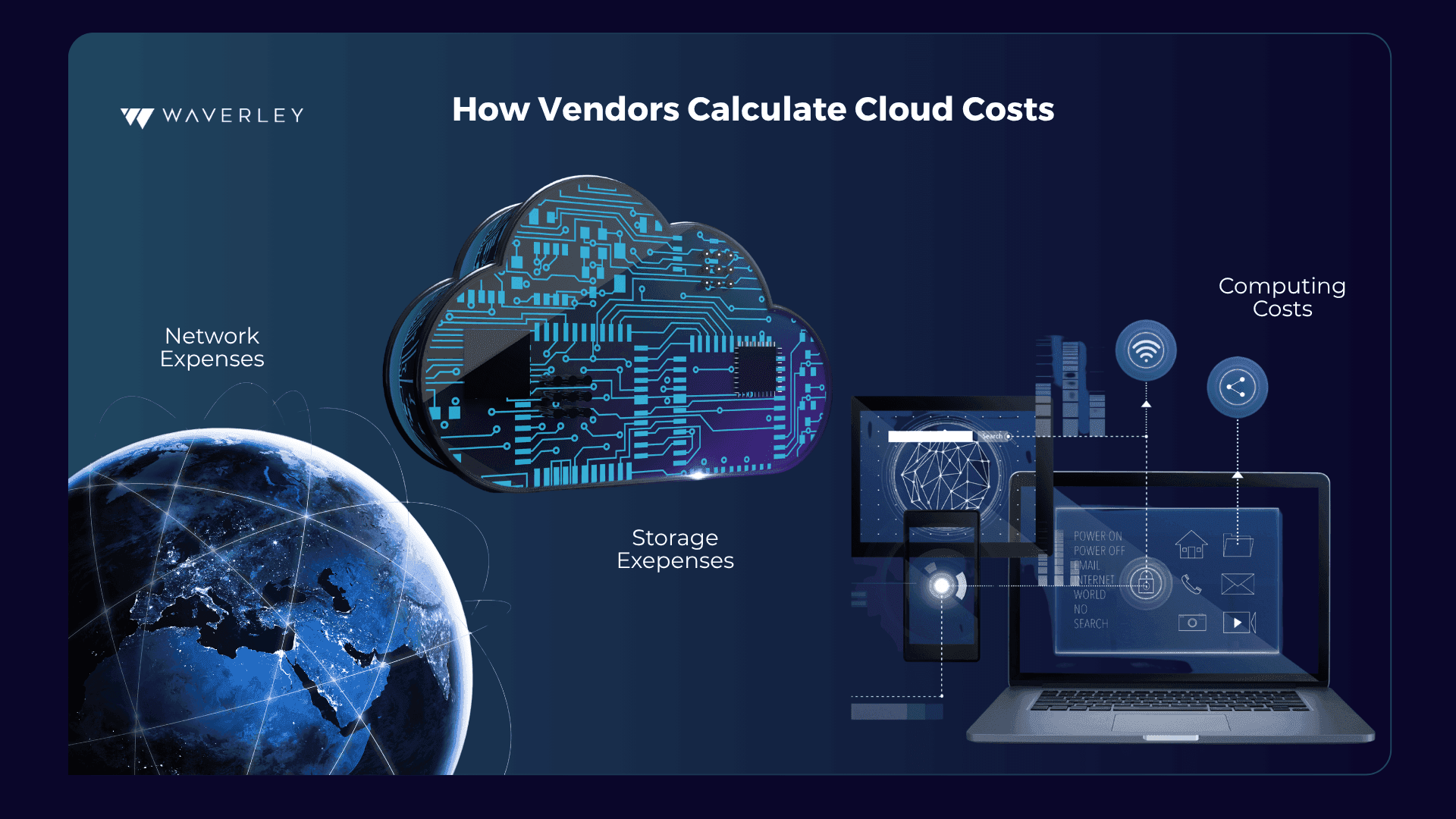
Cloud service providers use a variety of factors to determine how much to charge customers for their services. When wanting to calculate cloud costs, you will pay the price depending on your requirements. Some of the most important factors will include networking, computing, and storage costs.
- Networking expenses: In order to provide clients with dependable and efficient service, a vendor must consider the cost of maintaining and upgrading the network. This covers hardware costs such as routers and switches, as well as labor and maintenance. The vendor must also consider the cost of bandwidth as well as other factors that affect network performance.
- Storage costs: The vendor must consider the cost of providing storage for customer data, including the cost of purchasing and maintaining storage hardware, as well as the cost of electricity and other resources needed to keep the data safe and accessible. The vendor must also consider the cost of data transfer and other factors that affect the performance of the storage system.
- Computing costs: The provider must consider the cost of providing computing power to customers, including the cost of purchasing and maintaining hardware, such as servers and CPUs. The provider must also consider the cost of licensing and other factors that affect the performance of the computing system.
Tips to Save Costs
Cloud computing has evolved and will continue increasing due to day by day advancements in the tech sector. The market for cloud computing was worth $545.8 billion in 2022 and is projected to soar to a mind-boggling $1,240.9 billion by 2024, rising at a CAGR of 17.9%.
A survey also reveals End-Users’ projected spending on public cloud services over the past five years. BPaaS, PaaS, SaaS, IaaS, and DaaS are just a few examples of the services that fall under the general category of cloud computing services. Market value increased significantly between 2020 and 2022, rising from $270,033 to $397,496 with a 47.2 increase in growth.
But what about cost savings? According to Gitnux, over 90% of companies use cloud computing services which leads to an annual cost savings of at least 20% on infrastructure costs.
In 2021, businesses acknowledged the costs-saving potential of cloud-based services, leading to a 25% allocation of IT budgets towards these services. The proportion of cloud data center workloads has also significantly increased from 41% to 94%, enabling businesses to continue growing while enjoying cost savings. Additionally, cloud technology offers the opportunity to reduce energy consumption costs by 30-60%.
However, it is crucial to understand how to save on cloud computing expenses. Therefore, we will provide you with some valuable tips to optimize your business and save money.
1. Reduce the cost of downtime
It is no secret that IT companies face two types of challenges in the technological environment. Regardless of which one is in effect, the results have a negative impact provoking financial losses and decreased productivity. While it also affects the overall reputation of the organization.
- The disturbance in the operations caused by planned downtime.
- The recovery of data in situations of unexpected downtime.
Surveys prove that tech outages haven’t really changed. In the past three years, 80% of data center administrators and operators have seen some kind of outage, or downtime according to uptime’s Data Resiliency Survey.
The cost of downtime can be alarming. It may depend from business to business, but a survey has answered that respondents present downtime costs that vary from $1.5 to $5.6 million.
A transfer to the cloud would therefore be much more advantageous when this is taken into account. It is wonderful since cloud companies usually have a number of data centers scattered throughout multiple regions, offering regional redundancy and further reducing the likelihood of outage. Functions like load balancing, data replication, and failover techniques are advantageous if you choose the cloud.
2. Reduce the cost of operations
on-premises servers cost far more than other kinds of computer gear. They are thought to cost between $1,000 and $2,500 on average, yet,these aren’t set rates, and they could increase if you need more powerful servers.
Using on-premises comes with risks for your company. Even having your own IT department, it may not be enough to deal with the internal tasks. For example, SQL Server Database Administrators. The risks present include:
- Performance issues
- Database corruption
- Disruptions to business
In general terms, server costs or the support of servers requires routine maintenance and physical replacement that doesn’t last a while. This means that companies are losing $34 bn per year in unused enterprise software. This includes a waste percentage of 30% of applications that go unused and another 8% are barely used.
So, if you’re looking to cut operational costs you can look into cloud computing services. In fact, it is a lifesaver for your company, especially if you apply common strategies that you can implement to achieve goals for your company that include saving money.
- Automatization
- Outsourcing
- Efficient use of technology
- Continuous improvement
3. Reduce environmental costs
Technology may also have an impact in nature believe it or not. Managing on-premises data stores can be harmful to the environment. We work to help you avoid this problem by providing you cloud computing services.
One-premise infrastructure has direct and indirect costs that will most likely impact your business and the future outcomes of your projects. According to statistics, a quality physical server can cost from $5,000 to $ 15,000. Don’t forget that there are other overlooked expenses that affect you.
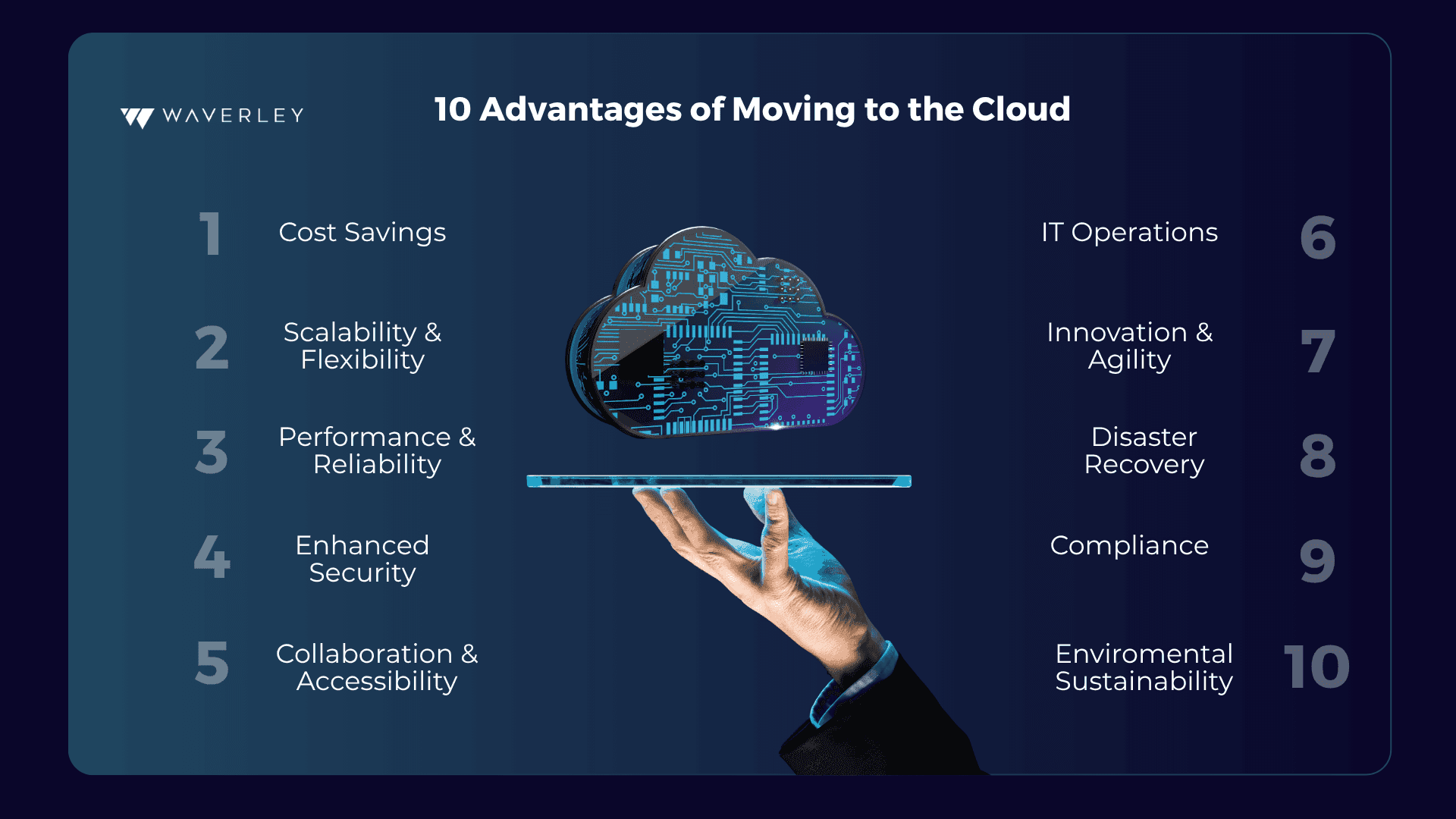
- Automatic software updates
- Low costs on hardware
- Flexibility
- Disaster recovery
- Improved partnership
- Unlimited workspace
- Security
- Competitive advantage
- Environmental friendly