Nowadays mobile traffic share is growing like mushrooms after the rain. People use their devices non-stop – starting from a jogging session in the morning till late night surfing in bed. The days when your grandmother couldn’t turn on a TV set are over. Now she’s coping with the smartphone challenge.
It doesn’t matter which business you’re in, the world is moving forward and you simply can’t stand aside or you will be left behind. For the last couple of years demands for mobile app development have gone up significantly – so has the number of ways to develop mobile apps.
Now we have 3 general ways to build a mobile application:
- Native iOS and Android apps. Native apps are more powerful and flexible compared to others. However, native development is also the most expensive and requires a lot of qualified human resources (one platform – one app).
- Cross-platform applications are fast and easy to develop in comparison to native. One code source works on multiple platforms (with some small changes). However, they are slow and in most cases require an internet connection. Graphics are scanty (complete animation and 3D graphics). It is often hard to develop large, sophisticated apps, and even harder to maintain and support them, because this type of application is based on HTML+CSS and Javascript code which works within a browser.
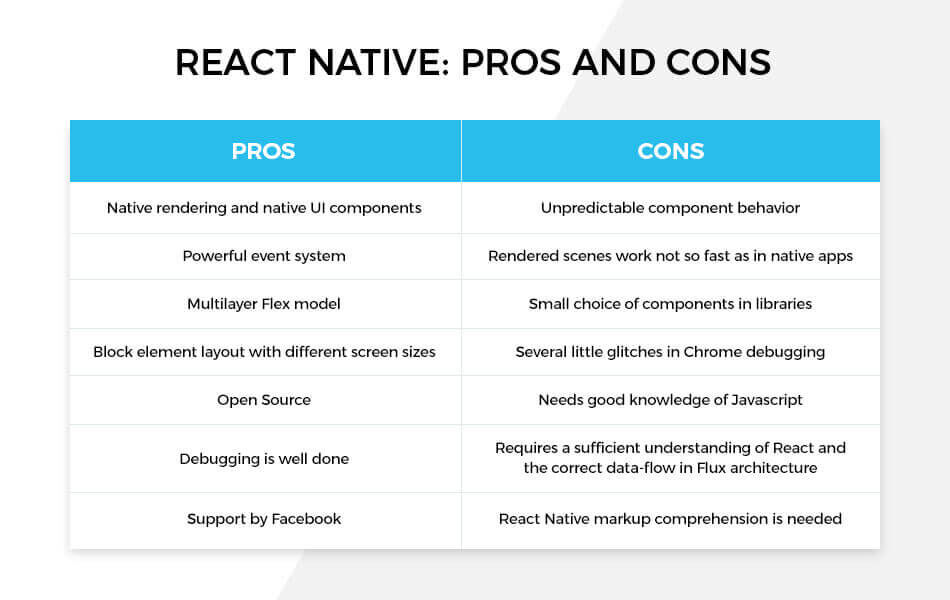
- Hybrid mobile applications are not new. They are not too time-consuming to build either. To be honest, they are significantly simpler in comparison to native apps. One codebase is compatible with both web and mobile platforms. On top of that, these apps have very good performance (hard graphics rendering is very close to native). They are definitely a favorite approach now, because as developers often say, “Learn once, run anywhere!”