If you fail in finding the right partner, challenges can vary from having late deliveries to not being able to manage a project correctly, especially if offshoring. Additionally, flexibility can be at risk and there can be problems with the NDA if the outsourced agency does not respect the intellectual property protection policy.
Although these are general, the following steps can help avoid any issues at the moment of any outsourcing destination including Mexico.
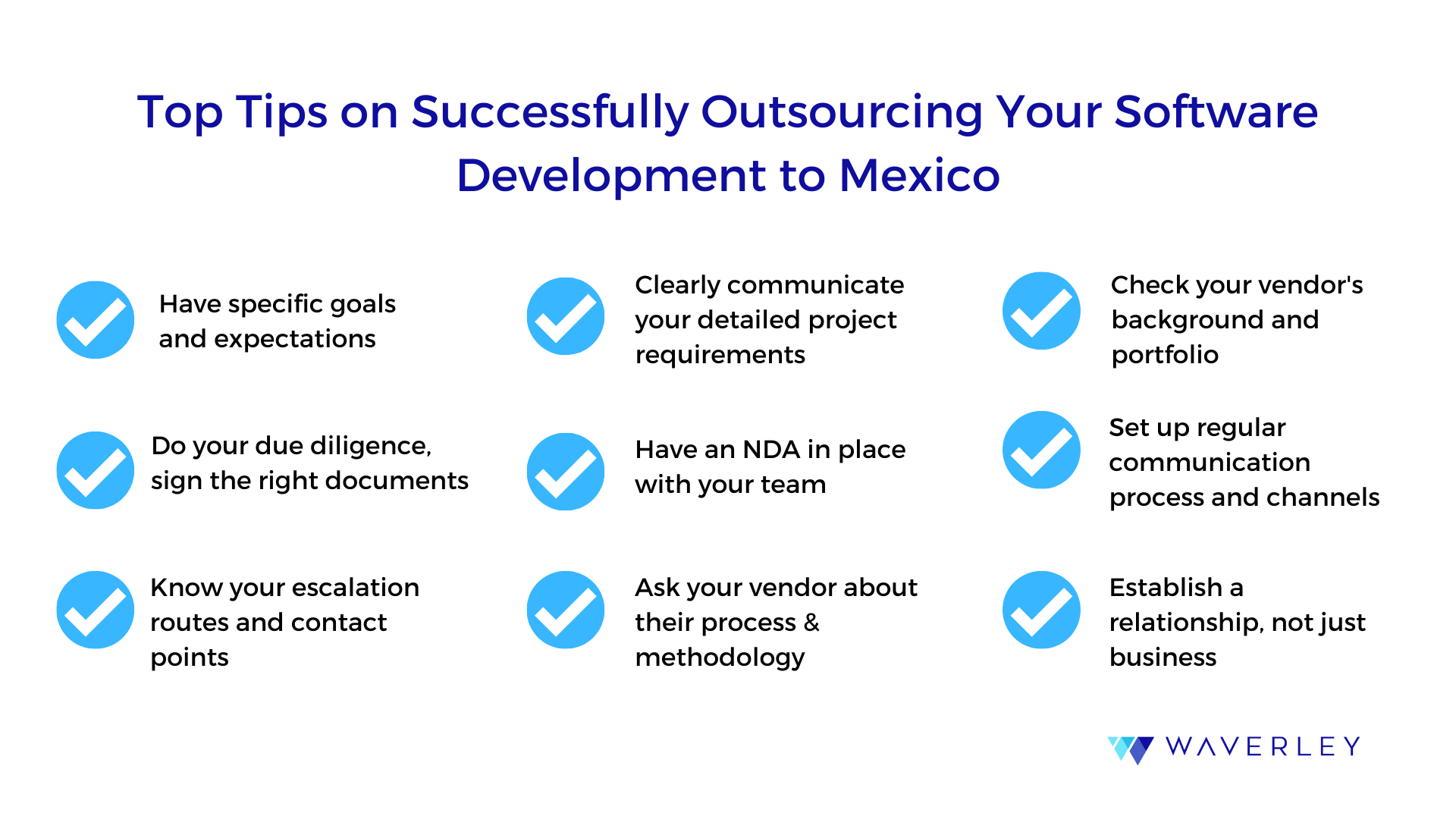
1. Ensuring Regular and Transparent Communications from the Start
As a first step, the form of engagement is important and there are some approaches that will help the process. Making sure that both parties are on the same side is important, as building solid communication is a key factor to create a solid outsourcing relationship. For this to happen it is crucial to pay attention to the following indicators:
- Convenient communication channels.
- Receiving fast feedback
- Misunderstandings about requirements or requests
- Tasks delivered timely
- There are clear and easy to use escalation ways
2. Checking Various Sources of Information
A second step related to the use of the internet can offer us a wide range of sources that will make it more accessible to find the right outsourcing company and verify that they are legitimate, and can deliver on their promises:
- Marketplaces
- Directory listings: Clutch, Goodfirms, The Manifest, Tech Reviewer
- Referrals through partners or colleagues, e.g. former clients or business partners
3. Looking for a Skillset Match
You have to make sure the company has the right skills in their portfolio and developer resumes, and has done similar projects before. Ideally, they would have worked with projects in your business industry or niche, and therefore understand your business needs and challenges better.
Overall Experience
Your software development team’s level of seniority is up to you, a proven and cost-effective approach is to hire a super-senior tech lead to come up with the architecture and strategy, and Mid and Junior level engineers to implement the solution under the guidance of a Tech Lead.
Here’s what you have to look for:
- Skill Sets matching your project needs
- Experience with the latest frameworks and tools
- Experience solving simple to complex challenges
- Ideally – understanding of your business domain
- High-quality coding skills and understanding of a SDLC
Development process
It is crucial to understand your vendor’s operations and to also share what is expected from them. It is essential to understand how much effort their dedicated software development team puts into organizing their work. Here are the questions you should ask your vendor before starting to work with them:
- Which project management methodology do they use?
- How do they deal with changing requirements?
- Are their project managers technical and PMI-certified?
- Do they deliver working results at the end of each sprint?
- How do they normally tackle technical debt?
- How do they organize reporting?
- Do they do peer code reviews?
- Do their developers undergo any secure coding training?
Way of Communication
Since outsourcing destinations mostly have a different time zone than the client, the communication channels are important. It is up to you to establish communication rules and guidelines with your team. Offshore development companies often use communication channels such as Skype, Google Meet, Gmail, and Slack among others. But here’s something you need to agree with your vendor on before you start the project:
- How often do you have sync-up meetings?
- Who is your primary contact point?
- Who can you turn to if you are unhappy with the deliverables?
- Can you replace a developer you’re not happy with? And if so, what is the notice period?
- How will they guarantee the security of your product and intellectual property?
- Who do you go to if there’s an urgent bug during their non-working hours?
Security
Assuring that the business’ confidential files, details and other project data is protected becomes a big deal for the company that is outsourcing. There have to be contract policies set up, in other words, it is important to set up and to have an NDA, PSA and SOW. This will only benefit both sides and will provide overall protection to both, the client company and the outsourcing firm.
4. Market Credibility
This is where web sources like Clutch come into action. This platform can help companies verify the legitimacy of the outsourcing company thanks to their former clients. Review platforms like Clutch provide a chance to read all the feedback from former customers, both good and bad. If a company sends a portfolio, you can also check how real those projects are. We also recommend looking at how many media articles there are about this company, how many social media mentions, etc.