
Which Cloud Strategy Should Your Company Choose?
From being a cost-cutting measure, cloud computing has developed into a key component of company innovation, scalability, and competitive advantage. These days, selecting a cloud strategy involves more than just technology; it also involves how your business functions, adds value, and adjusts to change.
However, many businesses still view this option as a binary choice—single-cloud, multi-cloud, or hybrid—despite the maturity of cloud technologies. Modern architecture is actually much more complex. Workload demands, legal frameworks, latency limitations, financial governance, and organizational maturity all influence them.
Talking with numbers, 89% of businesses currently employ a multi-cloud strategy, and 73% run hybrid environments, according to Flexera’s 2025 State of the Cloud Report. This indicates that most businesses are adopting a hybrid strategy rather than sticking to a single approach.
This convergence represents a paradigm shift: cloud strategy now focuses on efficiently coordinating multiple models rather than selecting a single one.
Contents
- From Adoption to Optimization: The Maturity Curve and Choosing a Strategy
- Single-Cloud: A Strategic Starting Point, Not an End State
- Multi-Cloud: Strategic Flexibility at Scale
- Hybrid Cloud: Balancing Control and Scalability
- The Economics of Cloud: A Double-Edged Sword
- Security in a Distributed World
- Performance, Latency, and the Rise of Edge Computing
- A Workload-Centric Approach to Cloud Strategy
- Conclusion: Strategy as an Ongoing Process
From Adoption to Optimization: The Maturity Curve and Choosing a Strategy
Organizations value speed in the early phases of cloud adoption. Teams can experiment, deploy quickly, and lower infrastructure management costs with a single provider. However, this simplicity begins to erode as systems grow and business needs become more intricate.
According to a McKinsey & Company analysis, cloud technologies have the potential to generate up to $1 trillion in EBITDA across industries, but only if businesses employ advanced architectural methods rather than simple adoption.
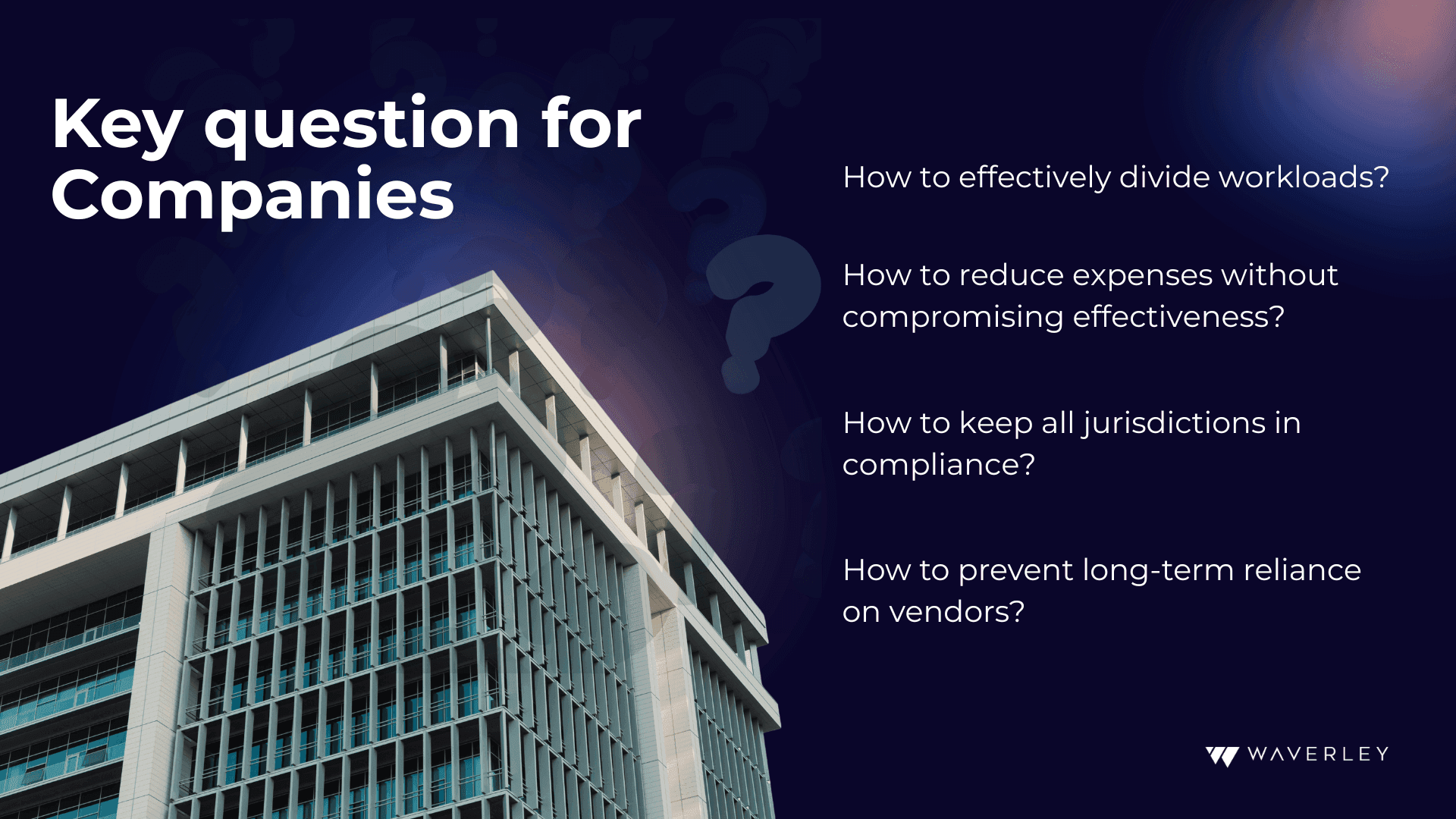
Cloud strategy becomes crucial during this transition from adoption to optimization. Now, organizations need to think about:
These factors frequently result in more complex architectures, such as multi-cloud and hybrid environments.
Single-Cloud: A Strategic Starting Point, Not an End State
Single-cloud setups remain important, especially for new businesses and companies with limited engineering budgets. Businesses gain from tight integration with native services, such as serverless platforms, managed databases, and AI tools, by sticking with a single source. This close connection lowers operational overhead and speeds up development. Centralized monitoring tools, uniform APIs, and a single identification system may all be relied upon by teams. This frequently results in a quicker time-to-market.
But there is a price for this efficiency. Applications become inextricably linked to provider-specific services over time, making transfer challenging. This tendency, also known as vendor lock-in, can raise long-term costs and restrict flexibility. According to Gartner, companies that rely too heavily on a single provider often have less negotiating leverage and pay more for transfers, especially as their infrastructure footprint expands. Thus, single-cloud is best understood not as a permanent solution, but as a phase in the cloud maturity journey.
Multi-Cloud: Strategic Flexibility at Scale
When businesses want to minimize risk, maximize performance, and avoid relying on a single provider, they develop multi-cloud solutions. Companies choose the finest tools for each use case and distribute workloads across multiple platforms rather than relying on a single vendor.
For instance, a business may:
- Due to enhanced AI tools, choose a single vendor for machine learning.
- One more for analytics because of cost effectiveness
- A third for the dissemination of content worldwide
This method enables a best-of-breed architecture, but it also adds a great deal of complexity.
Organizations use abstraction technology to handle this complexity. According to the Cloud Native Computing Foundation, over 96% of enterprises have adopted Kubernetes, underscoring its function as a standard layer for workload mobility.
This concept is further supported by infrastructure-as-code technologies such as Terraform, which enable uniform deployments across environments.
Multi-cloud is not, however, intrinsically efficient. Inadequate governance can result in:
- Disjointed systems for monitoring
- Incoherent security guidelines
- A rise in operational costs
To put it another way, multi-cloud offers flexibility, but only for companies that are developed enough to handle its complexity.
Hybrid Cloud: Balancing Control and Scalability
Strategies for hybrid clouds are frequently motivated by limitations rather than preferences. Certain data cannot be stored in public cloud environments due to stringent data protection regulations that organizations in regulated industries must comply with.
This issue is resolved by hybrid architectures, which combine:
- Private or on-site infrastructure for delicate tasks
- Public cloud for less important applications and scalable computing
The concept of data gravity had a significant impact on this methodology. According to data gravity, large datasets become harder to move, drawing services and applications to them.
Because of this, businesses frequently use the cloud for processing power while maintaining data in regulated environments.
According to IBM, businesses that embrace hybrid cloud solutions achieve 2.5 times higher innovation outcomes, primarily because they can upgrade applications without abandoning legacy systems. In industries like finance, healthcare, and government, where control and compliance are more important than sheer scalability, hybrid clouds are especially common.
Hybrid cloud is particularly prevalent in sectors such as finance, healthcare, and government, where control and compliance take precedence over pure scalability.
The Economics of Cloud: A Double-Edged Sword
Although there is no longer a need for an initial capital commitment, cloud computing presents a new problem: unpredictable costs.
Flexera claims that businesses squander about 30% of their cloud expenditures, often due to overprovisioning, idle resources, and poor visibility. In multi-cloud environments, when expenses span multiple billing systems and pricing models, this problem becomes even more pronounced. Businesses are increasingly implementing FinOps practices, as outlined by the FinOps Foundation, to address this. To ensure cloud spending aligns with organizational value, FinOps drives a cultural shift by fostering collaboration among engineering, finance, and business teams.
Security in a Distributed World
One of the most important—and misinterpreted—aspects of cloud strategy is still security. Every major provider uses a shared responsibility model, in which the client is responsible for protecting applications, data, and access controls, while the provider secures the infrastructure.
Amazon Web Services provides a clear definition of this model in its compliance documentation. This responsibility is much more complicated in multi-cloud and hybrid setups.
Organizations need to oversee:
- Several systems for managing identities and access
- Standards for cross-platform encryption
- Uniform security guidelines in all settings
Because of this, many businesses are implementing zero-trust architectures, which assume that no system, internal or external, can be trusted by default.
Performance, Latency, and the Rise of Edge Computing
Latency becomes an important consideration as applications become more interactive and data-intensive. The performance demands of contemporary systems are sometimes too great for centralized cloud models, especially in domains such as IoT, autonomous systems, and real-time analytics.
For that reason, edge computing, processing that takes place closer to the data source, has emerged.
By enabling developers to run code at edge locations worldwide, platforms such as Cloudflare Workers greatly reduce latency.In the same way, geographically dispersed places can access cloud capabilities with Microsoft Azure Edge Zones. These developments show that cloud strategy is becoming spread by design rather than centralized.
A Workload-Centric Approach to Cloud Strategy
The transition from infrastructure-centric to workload-centric decision-making is arguably the most significant advance in cloud thinking.
Organizations assess each workload separately rather than selecting a single strategy:
- Scalable public cloud infrastructure is advantageous for AI and machine learning workloads.
- Controlled surroundings are necessary for sensitive data.
- Applications that interact with customers require minimal latency and worldwide distribution.
- Legacy systems are frequently kept in hybrid or on-premises configurations.
This method produces designs that are multi-cloud and hybrid by nature, even if they aren’t called that.
Conclusion: Strategy as an Ongoing Process
The question of which cloud strategy a business should select has no clear solution. Instead of adhering to a single model, the most successful companies create flexible architectures that change as their needs do.
Multi-cloud offers versatility, hybrid assures control, and single-cloud offers simplicity. Edge computing adds a new dimension, enabling distributed, low-latency applications.
Integration, abstraction, and ongoing optimization are key components of cloud strategy in the future. Businesses that can consistently improve their strategy as technology and business needs evolve will be more successful than those that select the “right” model today. In this situation, cloud strategy is a discipline rather than a choice. With Waverley, we can demonstrate this strategy by assisting businesses in evaluating, designing, and continuously optimizing cloud architectures tailored to their objectives, spanning multi-cloud and hybrid deployments, cloud consulting, and migration. You can learn more about our cloud solutions, which reinforce the notion that cloud strategy is a continuous, developing process rather than a one-time choice. We support everything from architecture design to DevOps automation and cost optimization.
Ready to define the right cloud strategy for your business? Let’s talk.