
Before we dive into the subject, it’s crucial to understand that one-size-fits-all solutions are simply not possible when choosing the primary programming language for a software product. There’s also no “best” programming language; or “easy to learn” language; each has advantages and disadvantages. Your choice will depend on your project’s technical requirements, desired timeframes, allocated budget, and other factors. Unless you are a tech-savvy person, the best way to find out your ideal implementation is to get expert advice. Our experienced software engineers can evaluate your project from different angles and suggest the most effective language to allow it to evolve.
Advantages of Python
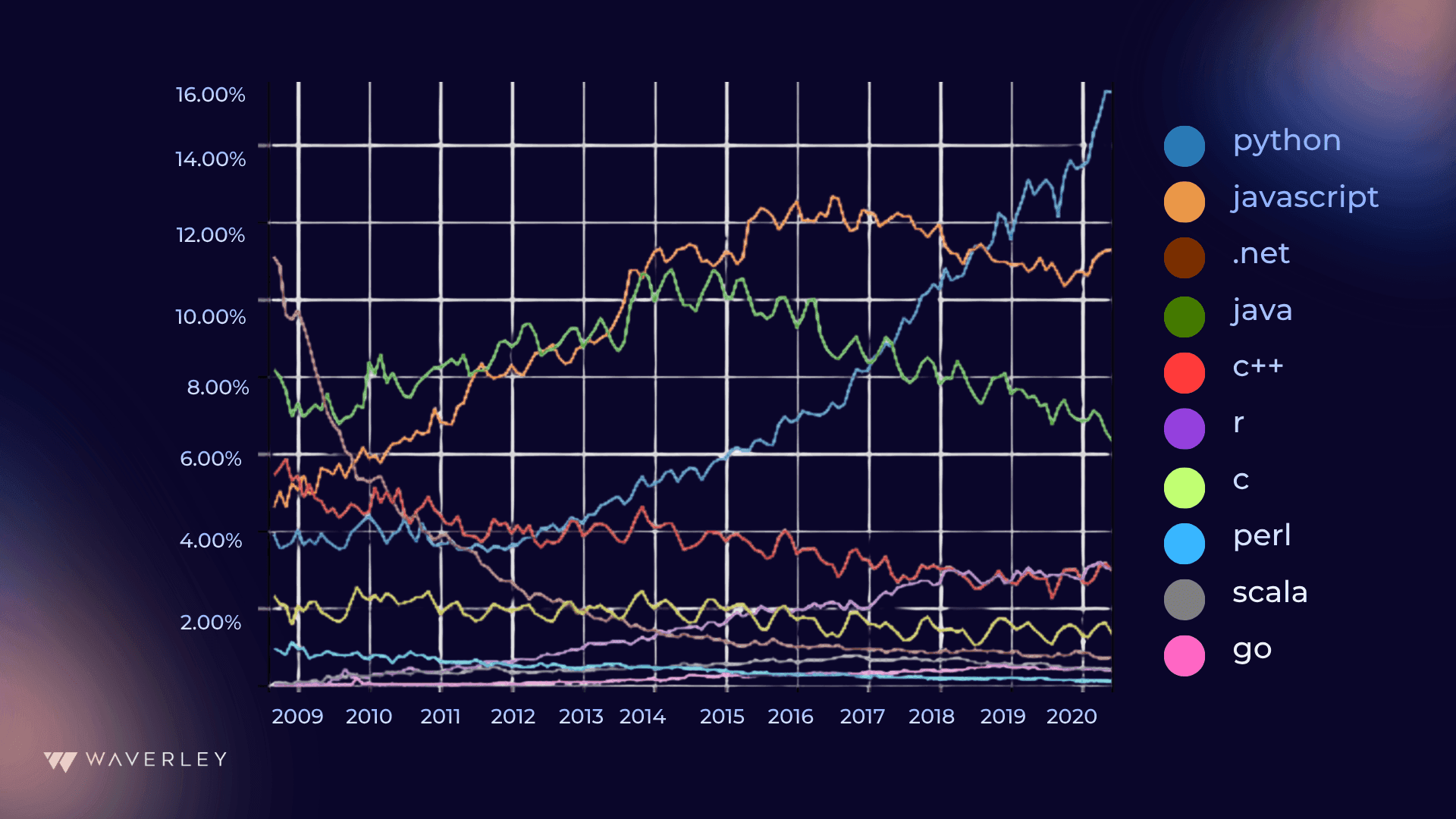
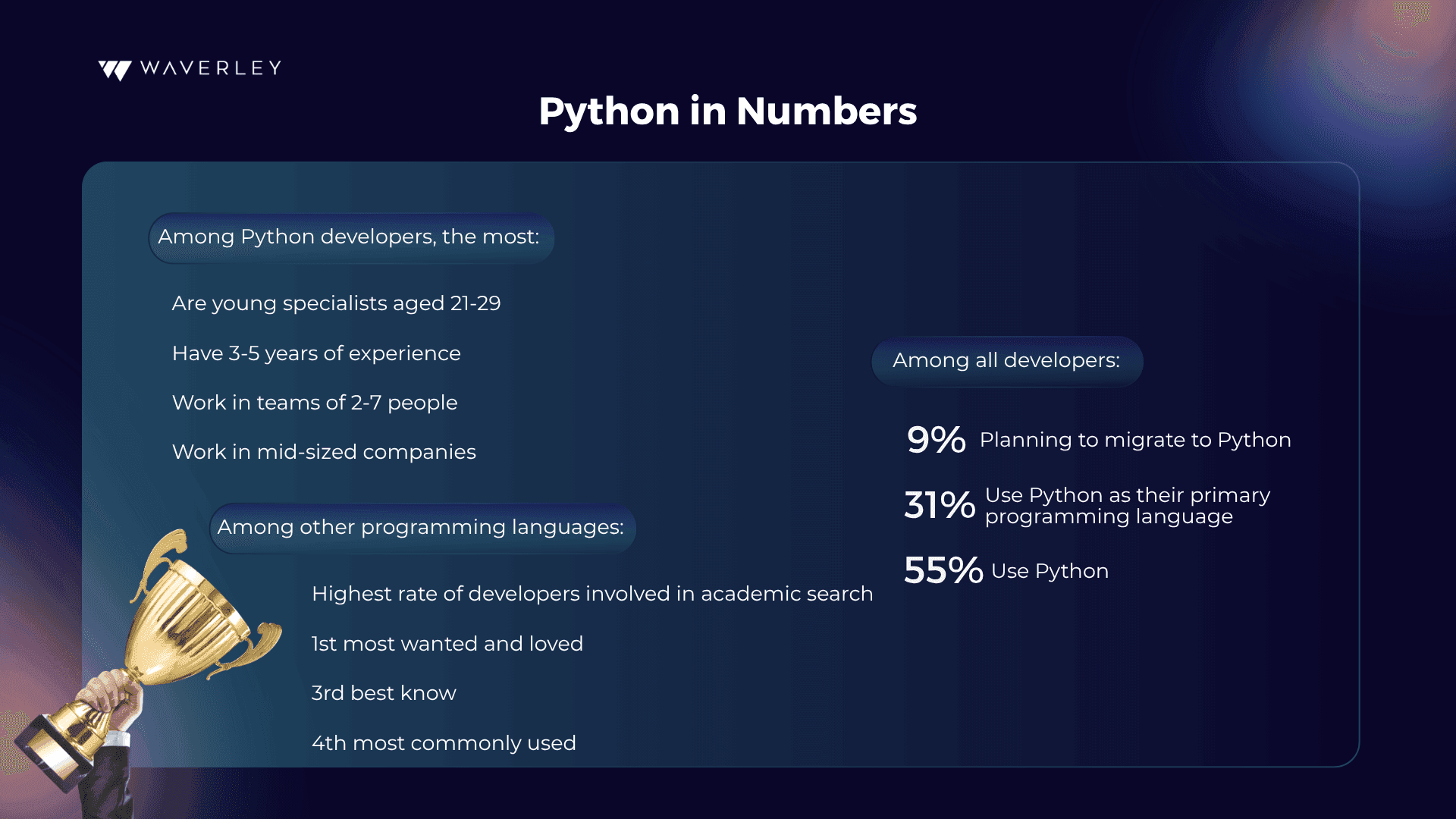
As for the Python advantages, it has been one of the most beloved programming languages in the development community since 2003 and it still ranks third among the most popular programming languages in TIOBE index just behind Java and C. Unlike C, Python is considered easy to read, and easy to learn. It was also named Programming Language of the Year in 2007, 2010 and, more recently, in 2018. Furthermore, because Python is cross-platform, it can run on different operating systems such as Windows, macOS, and Linux. According to Stack Overflow’s 2020 survey, 45.8% of Python engineers develop their software using Windows while 27.5% work on macOS, and 26.6% prefer Linux.
Let’s take a look at why the Python language receives such high praise from developers.
Code Readability
Who doesn’t like clarity when reading a piece of text? A well-structured paragraph, written in straight-forward language is far easier to follow and understand than one that is overly long and weighed down with excess words and detail. The same applies to computer programming. When working on a software product, developers typically read and modify existing source code. Code readability directly affects the way it can be imported, used, and maintained. One of the most often-cited advantages of Python, code readability is crucial on huge projects with numerous team members because every developer on the product must be able to understand what their colleagues have contributed to or modified in the code. For newcomers to the project, code readability is especially important to help them quickly get up to speed.
The Minimalist Principle
In Python, similar to artistic writing, brevity is the soul of wit. The philosophy that stands behind this programming language advocates concise but expressive coding. As a result, it requires much less time, effort, and lines of code than in other programming languages to execute the same operations. What’s more, the less complicated the code, the less chance of bugs, and the cleaner the code will be. This is yet another of the Python advantages that appeal to both developers and company leaders.
Object-oriented Paradigm
Python supports several programming paradigms: object-oriented programming, procedural programming, and functional programming. The object-oriented paradigm of Python is great for solving complex software development challenges. As one more benefit of Python, It allows developers to follow the Don’t Repeat Yourself (DRY) concept and SOLID principles in programming. The object-oriented programming approach also encourages modality of code that makes life easier for programmers with simpler troubleshooting, streamlined problem solving, and the possibility to reuse code. These are just a few of the additional benefits of choosing Python development services.
Huge Standard Library
One more of Python’s advantages is the way it’s designed to be a highly extensible programming language with lots of additional packages to offer. In keeping with the minimalist principle, Python avoids overloading programmers with features they don’t need. This allows them to make good use of the modular nature of this language and have a variety of tools at the ready to perform necessary tasks. Also as a part of the standard library
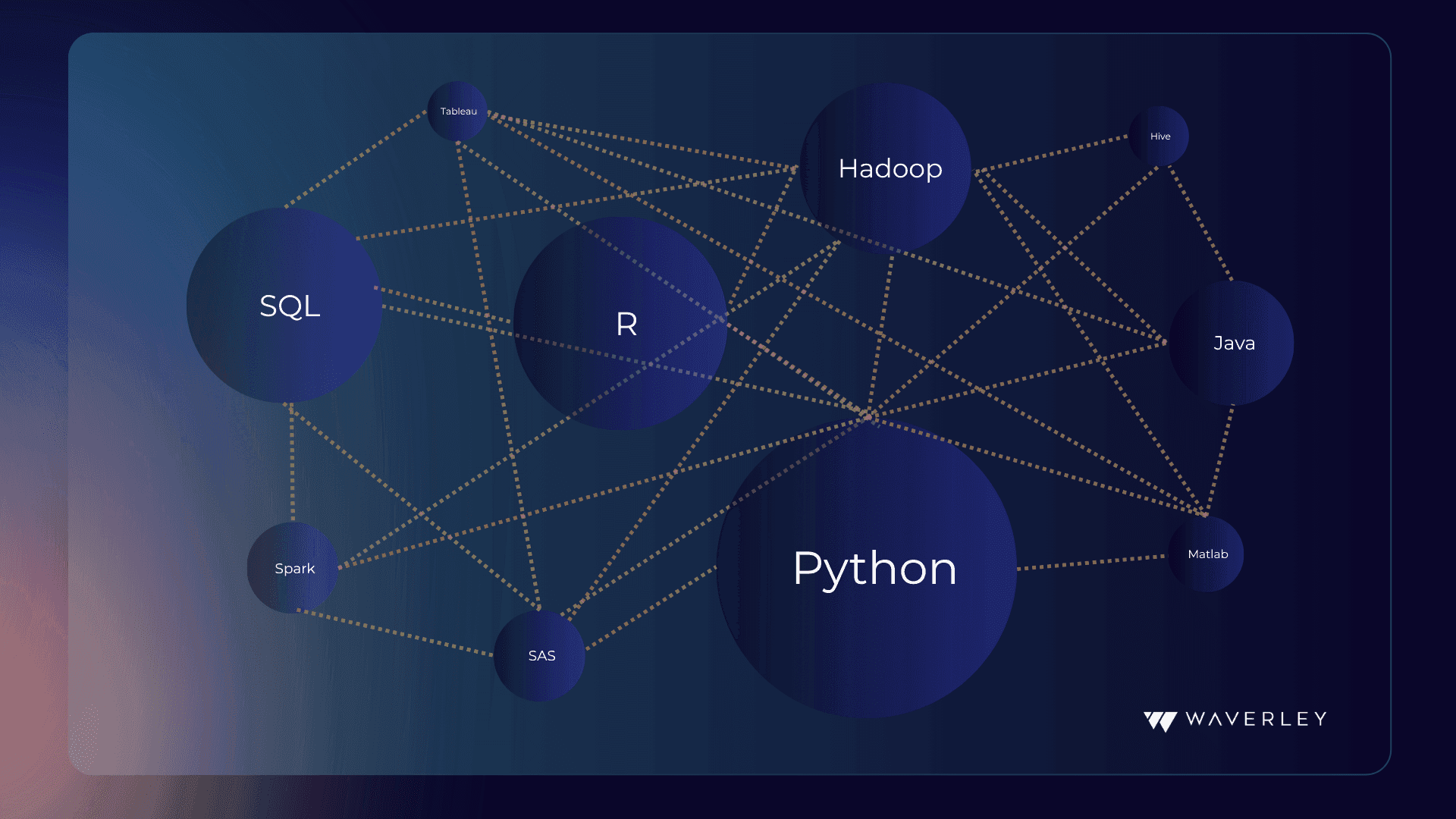
Python has more than 200,000 third-party packages to offer, the most popular ones being Django (Django Rest Framework), aiohttp, Flask, FastAPI, NumPy, SciPy, Keras, TensorFlow.
Community and Sustainability
Python language boasts a large supporting community of developers and contributors, with a dynamic fan-club that is continually growing. As a result, one can expect frequent updates, quick issue-fixes, and plenty of recommendations and answers to questions that arise. For product owners this makes it much easier to find good Python developers. Digging into the disadvantages and advantages of Python unit testing must be mentioned. Python has a built-in unit testing framework.
Development Efficiency
The benefits of learning Python such as great readability, word economy, abundance of white space and indentation also mean it is easy to use, takes less time to learn and less energy to understand the source code. And the clear, natural language-like syntax means fewer bugs to fix. Also, an extensive standard library plus the myriad of Python frameworks and libraries that are available for different purposes, combined with a mature supporting community means programmers can work quickly and efficiently.
Disadvantages of Python
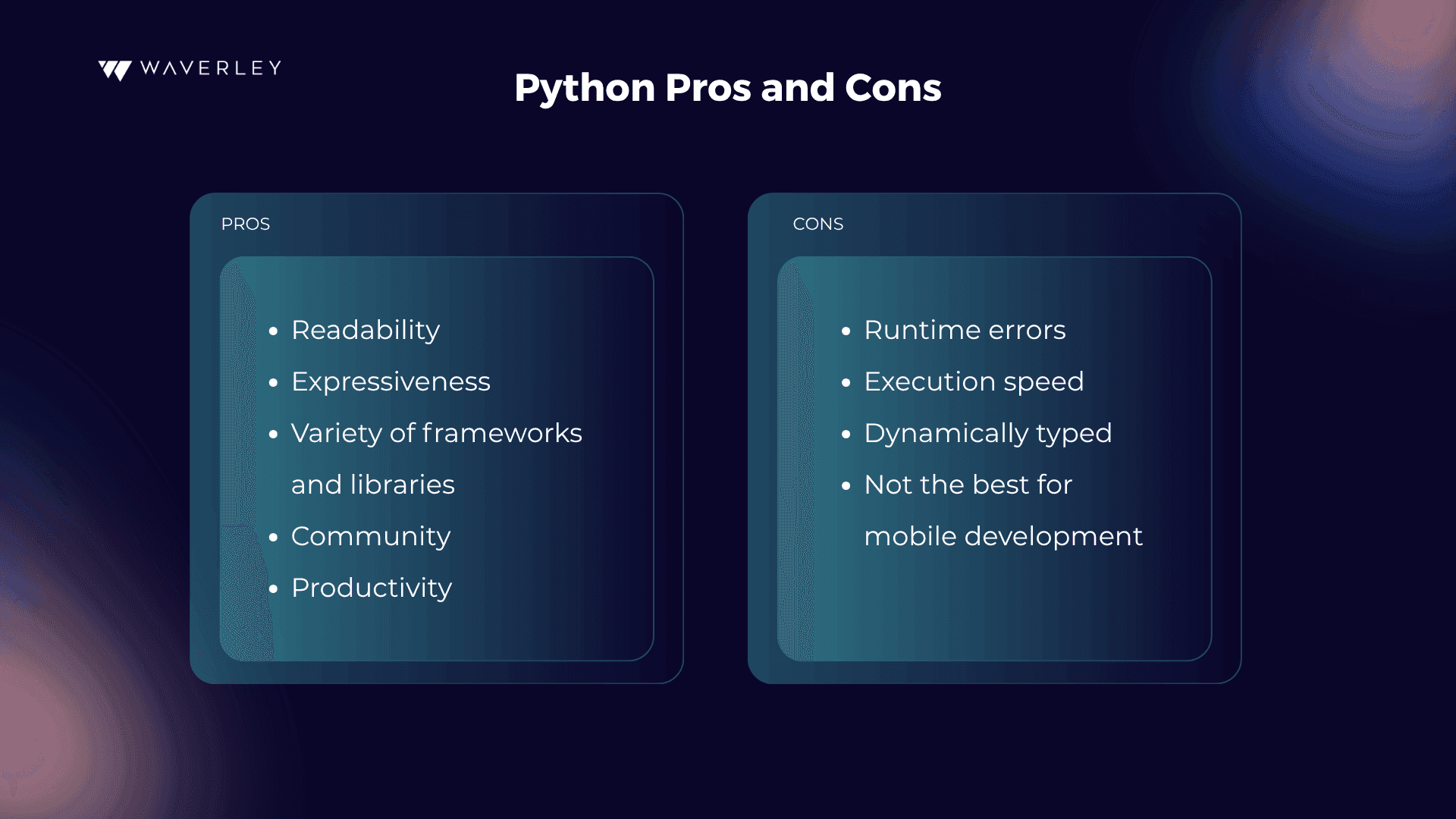
The disadvantages of Python are few, but, like any programming language, Python has unfavorable aspects. Even Python fans agree that some of the criticism is appropriate and objective, whereas much of it may be due to lack of programming experience, insufficient background, or a simple matter of allegiance to another programming language. For example, Python’s limited use for mobile computing, or the fact that Python’s memory is not efficient, plus the processing power is rather slow. In the interest of an objective evaluation, there are a couple of Python disadvantages that are worth considering in order to make a fully-informed decision. Since the benefits of learning Python outweigh the disadvantages.
It’s Slow
Compared to some programming languages, Python’s execution speed is low the reason being: Python is an interpreted language. This means its source code gets executed without first compiling a program into machine-language instructions. The speed of such an execution is much lower than with compiled languages. However, this does add some flexibility and features not available with compiled implementations. It’s also high-level: it has a high degree of abstraction. In other words, it reads more like a natural language and hides all the computer details from the developer’s eyes. This does affect the execution speed but, at the same time, is what makes Python code so clean and readable.
Dynamic Type Checking
Python is dynamically typed meaning type checking is performed at runtime, and this increases memory consumption and slows down the operation making it one of the cons of Python. Also, with dynamically typed programming languages, such as Python, errors show up only during runtime, which makes a program less reliable. On the other hand, dynamically typed languages are more flexible and agile in processing, and developers find them easier to use. The solution is test-driven development (TDD), which solves the issue of errors and is one of the best development practices in any case. You kill two birds with one stone.
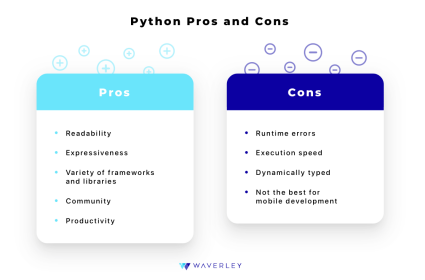
Taking into account the pros and cons of Python, the reason behind Python disadvantages offer benefits that outweigh the reduction in program execution speed. What’s more, it’s highly unlikely end users will notice at all. Given the overall increased productivity of dynamically typed languages, it’s no surprise that they, along with Python language, have found their niche in scientific computing, statistical analysis, scripting and automation.